NEW YEAR PREDICTIONS
 [January 1st] -- It's the new year, which means that it's time for resolutions and predictions. At my age, I've come to understand that I've never kept a resolution in my life, and I'm not going to start now.
So lets stick with the predictions.
1] Alfonso Soriano finds out that Wrigley Field's "friendly confines" aren't so friendly after 
- Ave: .280 - AB:658 - R:105 - H:185 - 2B:40 - 3B:3 - HR:35 - RBI:94 - SB:35 - OBP:.325
Those are very good numbers, but they aren't great numbers, and a guy who earns $18 million dollars a year needs better-than-great numbers. Guys like Albert Pujols and Ryan Howard, players who can carry the team for months, deserve those kind of dollars. But not Soriano. I predict that the pressure of the contract as well as the law of averages will takes their toll and he will not have one of his best seasons in 2007:
- .267 - 31 - 85 with 33 stolen bases.
I'd say he'll "earn" about $8 million next year while making $18 million. It's not going to be a fun year for Alfonso Soriano.
2] Brian Lawrence will make us wish he was still in the Nationals' rotation (not that he really ever was). Lawrence is currently holding private workouts and h as attracted several teams, particularly the Colorado Rockies, who believe that his hard sinker would be perfect for Coors Field (note to management: do you remember Mike Hampton?). He's throwing smoothly and without pain.
He had a terrible 2005 season -- why else would he have been traded straight up for Vinny Castilla. But don't judge his ability on his 7-15, 4.83 record from two years ago. It isn't a stretch to believe his down year might have been the result of a bad shoulder that was diagnosed only after Lawrence joined the Nationals. Prior to 2005, Lawrence had a career record of 42-46, 3.86, having averaged 207 innings pitched per season over that period.
I realize that it would have cost nearly $5 million to have honored Lawrence's option year, and that would have been a risky move considering his shoulder. But considering how much money the team has saved in its payroll costs, it may have been a risk worth taking. There certainly weren't any free agent pitchers on the market who could have provided 200 innings and a .500 record for $5 million dollars. Here's my prediction for Lawrence assuming he signs with the Rockies:
- 12-13, 4.52 (4.19 if he signs anywhere else)
He would have looked very nice in the #3 slot in the Nationals rotation, and retaining him would have been acceptable under "the plan."
Coming to a city near you: "Ryan Church is GRADY SIZEMORE II!" Although Ryan Church is still a National, I don't expect him to be in D.C. come opening day. You j ust don't have so many people within your organization saying so many bad things about you and then remain part of the team like nothing has happened. I still don't know the real reasons behind Church's problems with the team. He is a laid-back California type, which to some indicates a lack of passion for the game. He is a deeply religious man who had the audacity to speak publicly about his private views. That said, he is an extremely talented player. Yes yes, he has a problem with outside breaking balls and doesn't have the range to play center, but he does many other wonderful things. Take a look at his career stats based on a 580 at-bat season:
- Hits:156 - 2B:36 - 3B:5 - HR:23 - RBI:91 - Ave: .270 - OBP:.347
His 2006 season (again, based on 580 at-bats) was even better:
- Hits:162 - 2B:51 - 3B:3 - HR:30 - RBI:105 - Ave:.276 - OBP:.366
That he hasn't played a full season doesn't mean that he can't. One of the biggest problems for part-time left-handed players is batting against lefties. Church hits lefties better than righties. He's 28 and he's ready to become a full-time player somewhere.
My guess is it'll be somewhere else, which is just too bad. I sincerely believe that in the end, Ryan Church will be a better major league hitter than Austin Kearns. Kearns, then, could have brought a pretty decent starting pitcher in a trade, opening up right-field for Church.
But it'll never happen. Makes just too much sense.
Ryan Zimmerman and the sophomore slump: When I was a young kid, the "sophomore slump" was something that most second year players had to deal with. A solid first season was usually followed by a disappointing second year. Then, the player would rebound in his third year and went on to have a solid career.
Don't expect Zimmerman to go the way of his elders.
Zimmer man showed maturity beyond his years in 2005, and will likely make tremendous gains in the next couple of years.
Ryan started off slowlyin 2006, and saw his batting average dip below .240 in late April. The reason? Pitchers found a hole in his swing. Zimmerman was swinging at every off-speed pitch thrown down and away. The strikeouts were piling up and his average was in a nosedive.
Then he did something that he would do many times during the course of the year. He adjusted. He began to hit that outside pitch to right field for singles and doubles. When pitchers stopped throwing down and away, he began to hit homeruns. Time and again, the opposition would find a chink in his armor, and he'd compensate and correct. A young player who can do that, especially at 22, isn't going to backslide in his second year.
Many hope that Zimmmerman's career will continue along a path set by fellow 3rd baseman and close friend David Wright. I think Ryan will do better. Wright hit 42 doubles in his first full season and 40 doubles last year, though his home runs didn't show any remarkable improvement. Zimmerman hit 47 doubles (and 10 doubles in just 58 at-bats in 2005). Those high double numbers (and his 20 homers last year) are classic signs of a young power hitter whose body is still developing. Very soon, his doubles will decrease as his power increases. Balls that used to bounce off the outfield fence will fly over it. The change may come next year, perhaps the year after. My prediction for Zimmerman next season:
- .303-29-117 with 41 doubles
He's going to be a very special player for many years to come.
It's going to be a tough 2007 season -- no one doubts that -- but we have to be like the fans of the 1962 Mets, that is, to look beyond the losses and see the promise the future holds.
And the future will very bright, indeed.
I hope that your new year will be full of hope and happiness. Thank you for taking time out of your busy day to read "The Beltway Boys."
Nationals.com speaks: Bill Ladson gave his first glipse of his version of the 2007 Nationals. Here is their lineup as he sees it.
2B - Felipe Lopez
1B - Nick Johnson
3B - Ryan Zimmerman
RF - Austin Kearns
C - Brian Schneider
LF - Kory Casto
SS - Cristian Guzman
CF - Nook Logan
SP - John Patterson
SP - Beltran Perez
SP - Matt Chico
SP - Joel Hanrahan
SP - Mike O'Connor/Shawn Hill
CL - Chad Cordero
Though the batting order doesn't make a lot of sense, I'm not going to complain about the players themselves, with the exception of Nook Logan. Logan has never shown at any time, at any level, that he has the talent and ability to play everyday at this level. And if Logan is the best the team can do, then yes, the team is in for a long season.
Ryan Church and Alex Escobar both play center field adequately enough. Their offense would more than make up for the occasional balls that fall in because they aren't quick enough to cover center field's vast area.
Ladsen seems to favor Joel Hanrahan over Tim Redding, which is a little surprising. I imagine that either of them are capable enough to put up numbers like 10-14, 4.60 or so, maybe a little better if the offense produces again in 2007.
Pitchers begin to repoort to Vierra in 45 days. How cool is that?
Red Sox still Cordero'ing: The Boston Herald is reporting that the Red Sox are still interested in Nationals' closer Chad Cordero, but not at Jim Bowden's price - their top two pitching prospects, Clay Buchholz, Michael Bowden and closer Craig Hansen.
Bucholz , a 22 year old who pitched for Wilmington in the Carolina league last season, has a career record of 11-5, 2.47 in 39 starts. He allows only ten baserunners per 9 innings pitched and strikes out almost 11 per 9 innings. He seems to be the real deal.
Bowden, 19, played mostly at class 'A' Greenville, going 9-6, 3.51 with 10 baserunners and 10 strikeouts per 9 innings. Like Buchholz, Bowden shows remarkable control for a young pitcher.
Craig Hansen has already made it to the major leagues. After compiling a 3-2. 1.82 minor league record, Hansen has spent parts of two seasons in Boston, going 2-2, 6.59.
I don't think that the Nationals would need Craig Hansen unless the Red Sox are willing to part with him as a "throw in." The Nationals have several relievers who have both the talent and demeanor to close for them. That said, I don't see Theo Epstein giving up both his top young starters for a reliever who is very very good but not dominant.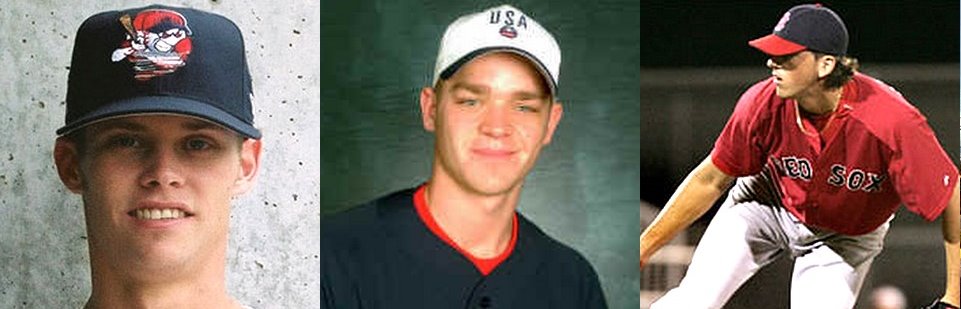
If Boston offers either Bucholz or Bowden plus another lower level prospect (A Matt Chico type), I'd do the deal. The Nationals currently have too many pitchers similar to Hansen to warrant including him (again, unless he's a freebie).
Jon Rauch would be a great closer. His 6'11" frame makes his ball difficult to pick up. His fast ball is fast enough, and he does a very good job at keeping runners off base.
I really think that the Nationals could trade Chad Cordero and never miss a beat.
Do the deal, Jimbo. That is, if you can.

NO NATS NEWS SO I SNOOZE
 [December 30th] -- On some Saturdays, there is a lot of news regarding the Nationals, and I spend a great deal of time typing furiously at my keyboard. On other Saturdays, there is no real news regarding the Nationals, and I spend a great deal of time finding something to report on, typing furiously at my keyboa
 rd.
rd.
But this Saturday, it's snowing, it's cold and I'm still tired.
I'm going back to bed. That's one of the benefits of living in Idaho -- you never feel compelled to go do something because there is so little to do here.
I'll publish later in the day. But - for now anyway - my Serta "Sleep Certain" double ply hotel grade uber-mattress is calling my name.
But before I hit the sack, a SENATORS TRIVIA QUESTION:
If you're a real Senators' fan, you might be able to name this former player. But if you spent your childhood doing nothing else but rooting for the Senators like me, you just might be able to name the player over his shoulder. Leave your answer in the 'comments.' The person who gets it right will win my undying gratitude. Oh, and if you can name the park the picture was taken in, then I'm not the only baseball deviant out there.
Oh, by the way, do you ever wonder how accurate the "retro" hats and uniforms really are that Major League Baseball tries to sell us? Take a look at the cap in the above picture. It was worn from 1964 through 1967 before being replaced by the red cap with the white "curly W." But take a look at that same cap depicted in my banner. I got all those images from the Nationals' store at the team's website.
There is quite a difference.
The white piping around the red 'W' is much wider on the cap in the photograph, but there is a big difference in the design of the 'W' as well. On both the red and blue retro cap, the end of the W's loop is squared off -- it's been that way on the "Cooperstown Collection" cap for many years. But the cap in the photograph shows what I remember; the end of the loop is full and curvy, and looks exactly like the one in use today. In all my research, I have never seen a single photo with that "squared off" 'W.'
Go figure.
CAN'T WE ALL JUST GET ALONG?
 [December 29th] -- When I was growing up in
  the early 1960's, the music of the Kingston Trio was always on the family record player (it was a stereo player -- my dad spared no expense). "Tom Dooly," "Charlie and the MTA" and "Raspberries & Strawberries" were all wonderful songs. My favorite, however, was a cute little ditty called the "Merry Minuet" that began with this refrain:
They're rioting in Africa (whistling)
They're starving in Spain (whistling)
There's hurricanes in Flo-ri-da (whistling), And Texas needs rain
The whole world is festering with unhappy souls
The French hate the Germans, the Germans hate the Poles
Italians hate the Yugoslavs, South Africans hate the Dutch AND I DON'T LIKE ANYBODY VERY MUCH!
The recent uneasiness within the Nationals' blog-o-sphere has made me think about this song often over the past few weeks. Several within the community have ceased being commentators and are now themselves the news of the day. Disagreements over the signing of low level free agents have taken on a very personal feel with both message and messenger being eviscerated on a fairly regular basis.
Without taking sides, this has to stop. The small band of brothers that are the Nats' Nation have come too far and seen too much to bicker over the signing, or not signing, of some pitcher who might, or might not, still have some juice left in his tank.
Whether you agree or disagree with how Stan Kasten and the Lerners ha ve set up shop, one thing is for sure: The Nationals have yet to play a game under "the plan." Nothing has happened yet. Perhaps the "anti-planners" will be ultimately right and will be allowed a thundering "I told you so" aimed right at the rest of us. Or perhaps the "pro-planners" trust and belief in one of baseball's top executives and one of the business world's top moguls will be well founded and a young, credible team will rise from the ashes of losing.
I don't know, and neither do you.
Look, the 1st Ammendment floodgates are open wide here at The Beltway Boys. Let the ideas flow. But why must the prose become prickly and end up being both personal and pedantic? We can disagree all we want; it's not like we're debating a subjective, unquantifiable result. The Nationals will have a definitive record at the end of each and every season, and we'll have plenty of time to demand accountability regarding the team wins and losses. Let's not pull apart the team before it's even come together. Let's look at the results of "the plan" before deciding on its merits.
It's kind of like filing for divorce a year before getting married because you're afraid your fiancee is going to have an affair sometime in the future.
It makes no sense.
I'm not advocating for a monolithic block of blogs. I am, however, asking for smooth sailing from the skippers of the S.S. Nationals task force. As one of the rust-buckets screening the big ships, it's not my job to torpedo my own aircraft carrier. Rather, I desire to guide it to it's next destination doing whatever I must to insure its safety - and that can include demands for the captain to change course when warranted.
Differing opinions are great. But in the words of the knight in "Indiana Jones and the Last Crusade," "Choose wisely."
Please?
Bobby Murcer Ill: Bobby Murcer has been diagnosed with a brain tumor and was to have surgery on Thursday to remove it. I remember Murcer's Nationals playing the Senators in spring training of [I think] 1969. He played at third base and fellow rookie Jerry Kenney was in center. As I recall, both made a couple of errors and misplayed a few balls as well. When the Senators played the Yankees on opening day a few weeks later, Murcer was in center and Kenney was at third.
He had a good enough career that the San Francisco Giants traded Bobby Bonds straight up for the Yankees center fielder. Bonds is gone now, and Murcer .... well .... I offer him my best wishes as he goes through this difficult time.
CHRIS SCHRODER: WALK TALK
 [December 28th] -- Whoosh - pop. Whoosh - pop. Whoosh - pop. That's the sound of Chris Schroder's fastball hitting the catcher's mitt.
"Ball f-o-u-r!"
That's the sound of the umpire sending yet another one of Schroder's opposing hitters to first base.
And therein lies the problem.
I didn't know his name when Schroder pitched his first major league game last summer. His numbers with the Nationals - 0-2, 6.35 - certainly doesn't suggest that the Oklahoma native is headed for any real success at the major league level. At 28, he hasn't been a prospect for several years. Yet there he was, pitching 21 games for the Nationals last summer. He's a 28 year old rookie who still commands a spot on the 40 man roster.
What gives?
Schroder, a product of Oklahoma City University, was taken by the Expos in the 19th round (#562) in the 2001 amateur draft. At 6'3" and 210 pounds, Schroder looks like a power pitcher but his fastball rarely hits 90 mph. Yet throughout his minor league career, he's been a strikeout pitcher. A career 25-14, 2.95 hurler, Schroder has averaged more than 11 strikeouts per 9 innings pitched. How did he do it? "Late movement" according to former New Orleans' manager Tim Foli and "late life" says Nats' pitching coach Randy St. Claire.
His hits allowed per 9 innings is just as sparkling. The Nationals had only one pitcher - Chris Booker - who had a hits to 9 innings ratio below 8.0. Schroder has allowed only 6.8 hits per 9 innings during his minor league career. By way of example, Johan Santana averaged 8.71 hits per 9 innings during his time in the minor leagues, Roger Clemens 6.14 and Brandon Webb 8.82. So it's obvious that Schroder is in fast company.
So if he's so good, why did he just this year get an opportunity to pitch in the major leagues?
Maxwell Smart. Agent 99. You know; control.
Clemens averaged 2.1 walks per 9 innings in the minors, Johan Santana 3.58 and Brandon Webb 3.12.
Chris Schroder has averaged 4.36 walks per 9 innings.
High walk totals in the minor leagues are usually compiled by power pitchers trying to learn the strike zone. Randy Johnson averaged nearly 7 walks per 9 innings in the minors but only half that many in the majors. He was finally able to learn how to control his electric "stuff." Each year, his walk total diminished. He was learning his craft. 
But Schroder is neither a power pitcher nor is his walk totals diminishing. Take a look at his walks per 9 innings totals since his rookie year:
- 2001: 3.00
- 2002: 5.21
- 2003: 5.14
- 2004: 4.11
- 2005: 4.84
- 2006: 3.40
And in 21 games with the Nationals, Schroder averaged nearly 5 walks per 9 innings.
Again, if he can't pitch straight, why are the Nats giving him another chance?
Schroder wasn't a day-in-and-day-out mediocre pitcher in 2006. He was either really really good or really really bad. I broke down his 21 appearances last season into two categories: games where he walked no one and games where he walked at least one. Talk about a night and day difference.
Games with no walks:
- Games: 9 -- Innings pitched: 18 -- Hits: 5 -- Strikeouts: 17 -- BB: 0
Games with at least one walk:
- Games: 12 -- Innings pitched: 10 -- Hits: 18 -- Strikeouts: 22 - BB: 15
When Schroder is in control, he is unbeatable. He averaged less than 3 runners and almost 9 strikeouts per 9 innings when he walked no one. When his control suffered, however, he really suffered, allowing 16 hits and 13 walks per 9 innings.
Which is the real Chris Schroder? Is there a real Chris Schroder? Withou t question, he'd be a tremendous asset in the Nationals bullpen (he's never started a professional game) if he could just keep his pitches in the strike zone. When he begins to miss on the corners, he tends to pitch down the middle to compensate and ... well ... we know what happens when pitchers do that.
As for the Nationals, they remain hopeful. Randy St. Claire worked with Schroder to increase the "bite" on his slider throughout the summer. "I like him," said St. Claire. "I like him because he likes to pitch with his fastball and has command of his fastball. He knows how to pitch up in the strike zone, which is very big."
Even with the positive accolades from his pitching coach, time is running out for Chris Schroder. He's a special talent -- I mean, how many guys with a 90 mph fastball strike out more than a batter an inning? But the last thing a team needs is a relief pitcher who comes into a game throwing balls and walking batters; it's the old "pouring gas on flames" scenario. My guess is that if Schroder doesn't show the Nationals in spring training that he can throw strikes consistently, he just may lose that spot on the 40 man roster to one of the team's young pitching talents.
And that's too bad. Schroder is a lot like the engine in my old 1968 Oldsmobile 442. When it was misfiring, I could barely reach interstate speed. But when that Rocket V-8 was purring instead of puffing, the only thing I couldn't pass on the highway was the gas station.
I am going to hope for the best for Chris Schroder but I also understand the reality that wild pitchers just don't figure it out all of a sudden. That's "one in a thousand" type of stuff.
That said, here's hoping he's the one.
Zito Crossing The Bay? The Rangers are reporting that Barry Zito's agent Scott Boras has told them that he is signing "elsewhere," which is likely to be the San Francisco Giants.
First: yay! The Mets don't get him so the Nationals will have a few extra chances to win a game against the boys in blue.
Zito signing with the Giants makes a lot of sense. He has lived in San Francicso while pitching for the Athletics for many years, so though he's changing teams and getting a hefty pay raise, he'll continue to live in his current home. Now that's a pretty good deal.
Okay, now to the crazy part. Zito is getting a seven year deal for about $18 million dollars a year. I guess I shouldn't say 'crazy.' Zito is getting $7 million more than Gil Meche, which makes sense. That Gil Meche is making $11 million -- that's the crazy thing.
So Zito stays in the west. Of course, another arm in New York wouldn't have made much of a difference over the next couple of years, but when the good times come, I'd like the other NL East teams to be descending while the Nationals are ascending.
Only logical, right?
NOT JUST ANOTHER JOE
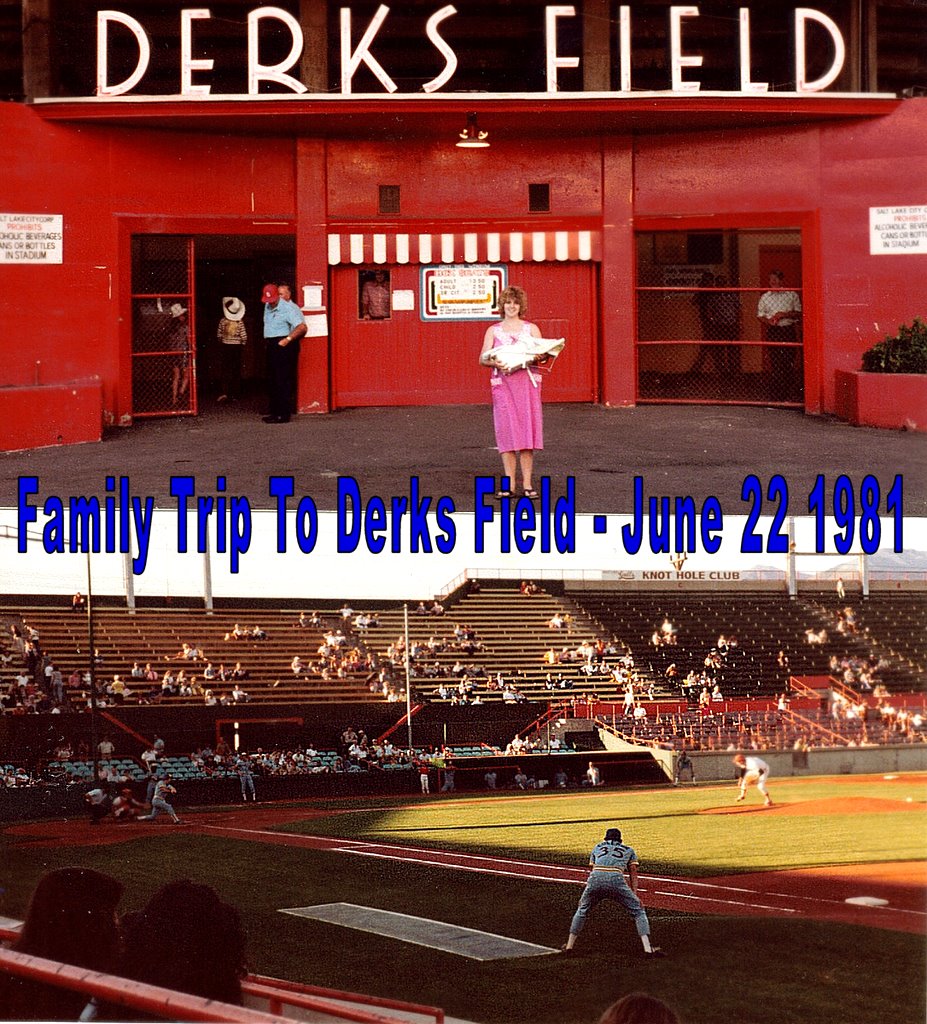
 [December 27th] -- After completing my last Air Force tour-of-duty in Japan, my wife and I spent a couple of years living in her family's home town of Salt lake City before returning to Washington D.C. It was there that my first daughter, Kira Katrina, was born on June 19th, 1981. The doctors let her go home three days later with the admonition that we "get her out into the sun" - she was suffering from jaundice. We were driving home from the hospital when we passed Derks Field, home of Salt Lake's 'AAA' baseball franchise, the "Gulls."
Cool. That's outside.
With my wife's permission, we pulled into the parking lot and made our way to the ticket booth. Two tickets; $3.50 total. Not bad at all.
As we entered the grandstand, we realized that it was "Picture Day" at Derks' Field. You could go right on to the field and have your picture taken with your favorite Salt Lake Gull (historical note: reme mber, crickets were destroying one of the first Mormon crops in the Salt Lake valley when sea gulls came "out of nowhere" and devoured the insects, saving the crops). Along the first base line, separated by twenty feet or so, were each of the Gulls' players and coaches. My wife - just 72 hours from pushing a bowling ball out from between her legs - begged off and took a seat just behind the first base dugout.
Carrying my new baby, I walked down the steps and onto to the field, and headed over to Daryl Sconiers, a high average - medium power first baseman. I handed him my baby and he eagerly grabbed her into his arms. As I was setting up the shot, he reached into his mouth and pulled out a small piece of his tobacco plug and said, "Hey baby, want some of my chew?"
"Snap," 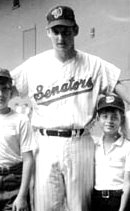 and I was outa-there.
I began to walk towards Tom Brunansky, the Gull's all-star outfielder who was only a few weeks away from being called up to the Angels. As I came closer, I noticed a man in a Spokane Indians' uniform watching with amusement at what the Salt Lake players were having to go through. Waiting for Brunansky's line to shorten I kept looking at this guy. He was too old to be a player, but certainly still looked in game shape. The more I stared, the more I began to realize that I knew this guy - not personally, but as a fan. Suddenly, while talking to Jim Maler, their first baseman, he went into a mock windup and threw a pitch.
BANG. Got it!
Just as Brunansky put out his hands to take my daughter, I turned and walked away and headed straight for that guy, whose team wasn't participating in "Picture Day."  I approached the man, handed him my daughter and said "hold this please." I took a few steps back and began to set up my camera. Confusion didn't begin to describe the look on his face.
"Um, we're not part of the picture day event" the man said. "Oh, I know -- hold still please" I replied. He then gave me a half-smile and said, "Oh, you must be from Spokane!" "Nope. Can you move your head to the left please?" "Seattle?" "Never been there. Raise your cap just a bit." I snapped the above picture while he was still trying to figure out why this guy from Salt Lake City shoved a baby into the arms. You can clearly see that "what in the heck is going on?" look on his face.
Now, I wasn't just a Senators' fan, I was A SENATORS' FAN. I knew every stat of every player who ever wore the expansion team's uniform. I knew all about this guy.
I was refoc using my camera when I said almost matter-of-factly, "In your first three games, you went 3-0, all complete games, and all before the age of 20 at that. How'd that feel?
Now he was shaking his head in disbelief. "Obviously you know who I am. Who are you?" I smiled and said, "Just another fan who'd loved to have had the chance to beat the hell out of Bob Short when he made that trade in 1970."
The man dropped his head and began to laugh. "If you want to beat up Bob Short, you must be from Washington," he said, still shaking his head. He put my baby onto his left shoulder and walked to me with his arm outstretched. "Hi, I'm Joe Coleman" said the lanky former pitcher with still a "tinch" of his Massachussets accent.
We talked for about 15 minutes before the "Picture Day" event came to an end. He told me that he really enjoyed his time in Washington, and yes, he couldn't believe that he went 3-0 with three complete games to start off his major league career. Coleman told me that - at first anyway - he was saddened to move on to Detroit, but he began to realize that he moved with a large part of his team, so at least he wouldn't be lonely, and maybe, just maybe, he'd have a chance to finally win a pennant. I asked him about Ted Williams. He said that during spring training of 1969, Williams scared him to death. "I was 22 for crying out loud -- just a kid, really. And me, being a kid from Natick, playing for a guy I grew up watching, a guy my Dad pitched against? It was crazy (his dad, Joe Coleman Sr. was a pitcher for the Athletics for many years and finished his career with a 52-76, 4.38 record). Over the next three years, however, he grew to appreciate Williams and his baseball knowledge.
Was Frank Howard as nice as he seemed? "Nicer." Who was the better left side of the infield, Mark Bellanger / Brooks Robinson or Eddie Brinkman / Ken McMulle n? "No one was better than Robinson but Kenny was the best of the rest. Eddie was better than Mark, and was a much better hitter in '69-'70." Could Hondo have been a better fielder if he practiced more? (smile) "Well, Frank was never much for practice, but then he didn't need it usually." What did you think of your trade when you first heard about it? "At first, I thought it was one-sided like everyone else, but not as much as you might think. I believed that Denny (McLain) would regain his "stuff" and win 15-20 games for Washington in '71. I thought Toby Harrah was close enough to take over at short or third, so they really needed to replace only one starting infielder." I didn't think it was a great trade, but not a bad one. I guess I was wrong."
I got the impression that no one had asked Coleman these questions for some time, and that he enjoyed the trip down memory lane. Although he had three or four outstanding years for the Tigers, he was never a household name, especially in Spokane Washington. I think he actually enjoyed the time we spent talking about his past.
I shook his hand and told him I enjoyed coming to RFK and watching him play. I had gotten about five or six steps towards the stands when he said, "Hey!" I turned and looked back to see that he had walked towards me. He put his hand out one more time and said, "If you paid those ticket prices at RFK, I guess I can 'comp' you a few tickets now." For the remainder of the series, I got into Derks Field free, thanks to Joe Coleman, former Senator.
Coleman d idn't just burst on to the scene in 1965; much was expected of the kid. Most of us with graying hair remember that Rick Monday was the first pick of the first major league baseball amateur draft that year. Few remember, however, that Coleman was selected by the Senators with the #3 pick, just after the Met's Les Rohr.
Coleman was terrible for Burlington of the Carolina league that first year, going 2-10, 4.56 in 12 starts. Amazingly, Coleman got a September callup (probably a P.R. move by the Senators) and got an opportunity to start two games. Two amazing games. Coleman completed both of them, allowing an average of eight baserunners per 9 innings. In 1966, following a 7-19, 3.75 season at 'AA' York, Coleman got the opportunity to pitch another game in Washington. Again, he pitched a complete game, giving up just six hits and two runs. In his first 27 major league innings, Coleman allowed a total of four runs.
During the remainder of his time in D.C., Coleman was slightly below average, going 40-50, 3.68. In the next fo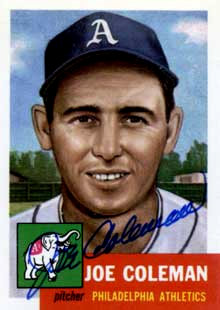 ur years with the Tigers, however, Coleman blossomed, going 58-50, 3.48. His ERA was a little better, but his accomplishmen
 ts clearly were helped by playing with a much better team. Following a couple of sub-par years with the Tigers, Coleman became a baseball gypsy, playing with the Cubs, Athletics, Blue Jays, Giants and Pirates before finally retiring in 1979 at the young age of just 32.
He was a pitching coach in 1981, and he is a pitching coach today. Since 2000, he has been the pitching coach for the Durham Bulls. Baseball has been Joe Coleman's life since his earliest days when he watched his father pitch for the Philadelphia Athletics at Fenway Park.
His father opened a sporting goods in their home town of Natick after retiring in 1955. The sign read "Joe Coleman & Son" in hopes that Joe Jr. would one day take over the business. It never happened. Instead, Coleman followed his father's other footsteps and became a professional baseball player instead. His father closed down the store a year or two later.
Was Joe Sr. saddened by his son's decision? No way - it was a "win-win" situation. His son could have followed his father into the family business, or he could have followed his father and become a major league pitcher. Either way, pappa Coleman must have been very, very proud.
Note: I was opening some boxes looking for a Christmas ornament when I came across the pictures I took at Derks Field that day, in addition to the program that had all the notes of my talk with Coleman. I knew that If I didn't write them down, I would have forgotten them.
BASEBALL IN POCATELLO - REQUIRED READING
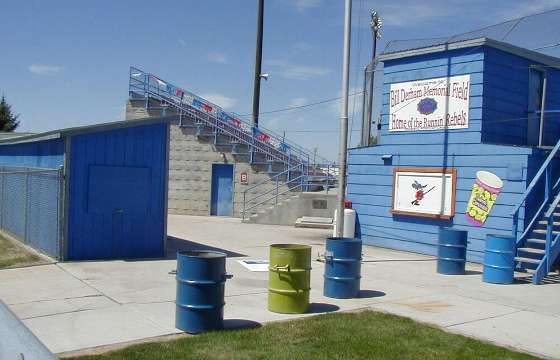 [December 26th] -- For the past two years, I have been writing all about baseball in your town, Washington D.C. As most of you know, I spent most of my life inside the beltway before moving to the Intermountain West. So I was thinking that it's only fair that, at least for today, I tell you a little bit about baseball in my town, Pocatello Idaho.
Baseball in Pocatello began in earnest in 1939 with the advent of the old full-season Pioneer League [though there was a team in the late 1920's that was part of the old Idaho-Utah League, they didn't play a regular schedule and played at Alameda Park - it wasn't a stadium, it was a park]. The team was an affiliate of the St. Louis Cardinals and played at the old Halliwell Field on the edge of town. Halliwell was fairly large for a 'Class "C"' league, featuring wooden bleachers that wrapped around the diamond into shallow left and right field. The dugouts were cinderblock boxes with no access to the clubhouse. When a player "had to go," he had to make his way to the side of the bleachers and open a barn-like door. The outfield fence featured ads that hawked the likes of Idaho Bank & Trust, The Paris clothing store and Union Pacific Railroad, by far the largest employer in town (Pocatello began as a railroad town in the late 19th century). Pocatello was at the time the largest city in Idaho though today Boise and its surrounding suburbs are ten times larger.
Tony Robello was the first manager for the Cardinals. Robello, a light-hitting second baseman in the Reds' organizat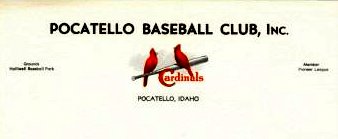 ion, batted .219 in 32 at-bats in 1933-34. Nick Cullop took over in 1942. Cullop, winner of 57 games from 1913-21, played both in the American League as well as the failed Federal League. Over the years, Bill Brenzel, Jim Tyeck, Rollie LeBlanc, Walter Lowe, Larry Bruton and Robert Comisky managed the team.
From 1952 through 1963, Pocatello had a succession of affiliations and team names. The Bannocks (for Bannock County), begat the Athletics who begat the Giants who begat the A's and finally the Chiefs (Pocatello is named after Chief Pocatello of the Sho-Ban Tribe). One ma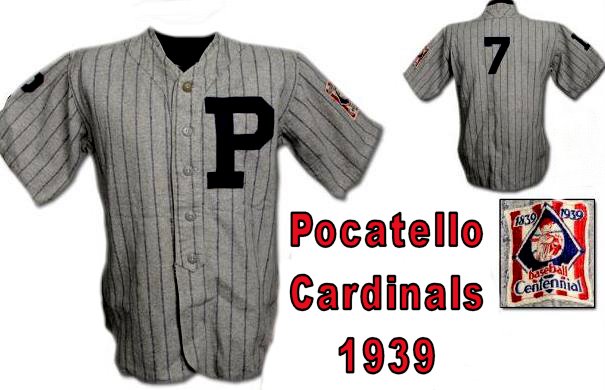 nager, Frank Lucchesi, went on to national prominance. Lucchesi managed the Phillies from 1970-1977.
The Pioneer League was reborn as a short-season rookie league in 1964. A year later, a failed Dodgers' pitcher, Tommy Lasorda, managed the Chiefs to a 33-33 record. Low attendance - a byproduct of television finally blanketing the region - caused Pocatello to lose it's franchise in 1965. In 1966, Pocatello had the Dick Van Dyke Show, Perry Mason and Batman, but they did't have professional baseball at Halliwell Field.
The old park was torn down in 1964 and replaced with a Buttrey's grocery store. A new Halliwell Park, not as large but far more modern, was built just a few miles away. In this 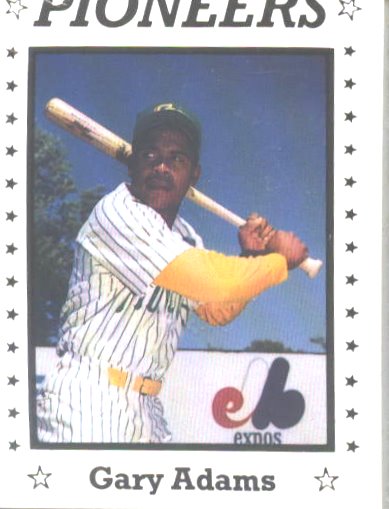 case, when they "built it," the team obsconded with both the uniforms and the equipment.
It took nearly twenty years for baseball to return to Pocatello when the Lethbridge club was moved in time for the 1984 season. They were known as the Gems (as in Idaho, "The Gem State"). They were terrible, limping home with a 23-47 record. The next season brought an affiliation with the Athletics, and hope for some stability was restored to the team's fans. Under manager Dave Hudgens, however, the team won just one more game, and poor attendance forced the team to suspend operations. The lone bright spot was Walt Weiss, who went on to have an all-star career with the Athletics, Rockies and Braves.
In 1990, an independent team was brought to Pocatello, though most in the city didn't think it was a wise idea. Independent teams, at least at the rookie level, can be pretty bad, and "pretty bad" usually equates to "pretty bad attendance." The Gate City Pioneers (Pocatello is known as the "Gate City to the West") were terrible, and the owners gave the team one more chance to succeed. They changed the name to the "Pocatello Pioneers," and hired Rich Morales as their new manager. Their record was a dismal 21-46, but more importantly, drew only 25,000 fans to Halliwell Park, an average of only 714 per game. The Pioneers didn't come back in 1992, and no one believed that Pocatello would ever see another professional team a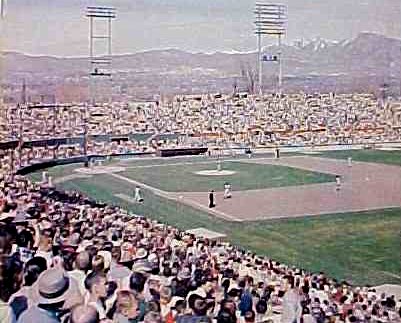 t Halliwell.
Almost no one.
One of the most successful independent teams in recent history was the Salt Lake Trappers, who won 29 straight games in 1987, the all-time record for professional baseball. They played in Derks Field - built just after World War II - and regularly filled it's 10,000 seats during that season. By 1990, however, part of the Derks Field grandstand was condemned and eventually, the stadium became an impossible place to play baseball. When it was announced that the facility was to be demolished and a new park built for the incoming 'AAA' Portland Beavers, The Trappers had to find a new home quickly.
Hello Pocatello.
The Pocatello Posse played their first game in 1993. I was luckily enough to be their "official" photographer. That first game drew 5,000 fans to Halliwell Field, which seated less than 2,500. When the grandstand was full, the general manager filled the outfield with the overflow. It looked like one of those World Series' games from the turn of the century. Several times, outfielders had to run into the crowd to retrieve a ball in play. The Posse finished the season 37-38, and drew 46,000 fans to the stadium - an average of 1,216 fans per game - 3rd best in the league. The late Cory Lidle was the team's best pitcher. All of Pocatello assumed that was good enough to keep the team, but they left for Ogden Utah at the end of the season.
We've been without baseball ever since.
There's been a few players in Pocatello's modern history who made it to the major leagues. John Boccabella, Jim Strikland, Bill Sudakis, Walt Weiss and Cory Lide are the most well known. Over all, however, few playe rs "make it" from the rookie-league level.
It's been a long time to go without baseball. Oh sure, we've got a team about 45 minutes away in Idaho Falls, but they're our arch-rival city. It would be like Washingtonians rooting for the ..... well .... you get the idea.
Baseball in Pocatello. It certainly doesn't have the history of baseball in Washington, but it's our history, and we're proud of it.
Nationals coverage returns tomorrow.
DON'T WORRY - BE HAPPY
 [December 24th] -- I'm not really good at all this "politically correct" stuff. I'm writing this in Idaho, which is, with apologies to Utah, the most religious state in America (based on recent polls), and I'm writing this for all my friends in Washington D.C., one of the most secular cities in the nation.
AN INTERVIEW WITH VERMONT G.M. C.J. KNUDSEN
 [December 23rd] -- The past two years haven't been kind to the Vermont Lake Monsters. Since their parent club's move from Montreal to Washington D.C., Vermont has a record of 51-100 and has finished in last place in the Stedler Division of the New York - Penn League each season.
But don't blame general manager C.J. Knudsen and his staff.
During a time when the S.S. Expo was sinking faster than an Eminem song on the Country and Western Charts, the Expos/Lake Monsters remained loyal to their parent club. Knudsen told me that one of the most popular promotions has been their “Tribute to Montreal” night that has become a yearly affair. "We bring someone in that has played for the Montreal Expos, and this year it was none other that 'El Presidente,' Dennis Martinez" Knudsen said. "He was a great guest to have at Centennial Field and the fans always love to see former Expos greats come and cheer on our Lake Monsters!"
Vermont's history 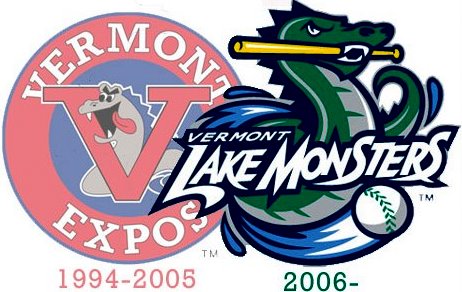 with the Expos/Nationals dates back to 1994. The success - and failure - of the Lake Monsters since the early years reflects the importance of player development at the major league level. From 1994-1997 - when the Expos were producing a cadre of solid major league players - Vermont's record was a lofty 139-86, including a league championship in 1996. In the years that followed contraction talks and ownership by Major League Baseball, however, the Lake Monsters faced difficult times, crafting a 104-193 record.
Loyalty is a wonderful thing, and for the Lake Monsters, good things are about to happen. After years of drafts based on "signability," the Washington Nationals are once again stocking their minor league affiliates with talented players.
After being known as the "Expos" for more than a decade, Vermont change d it's name and colors in 2006. With great fanfare, the team introduced the "Lake Monsters" name, logo and colors to their fans last winter. I asked C.J. how the name change came about. "The process of changing the name of the team from the Expos to the Lake Monsters began prior to the 2005 season. We received over 30,000 suggestions from fans during our 'Name Your Team' contest and we certainly received a variety of suggestions. The ‘Lake Monsters’ name really stood out because of the connection to our legendary mascot, Champ, as well as his home in Lake Champlain." When asked if there were other team names that were considered, Knudsen said that the “Green Mountain Boys” was also considered but believed that "Lake Monsters" was a better fit for both the team and its fans.
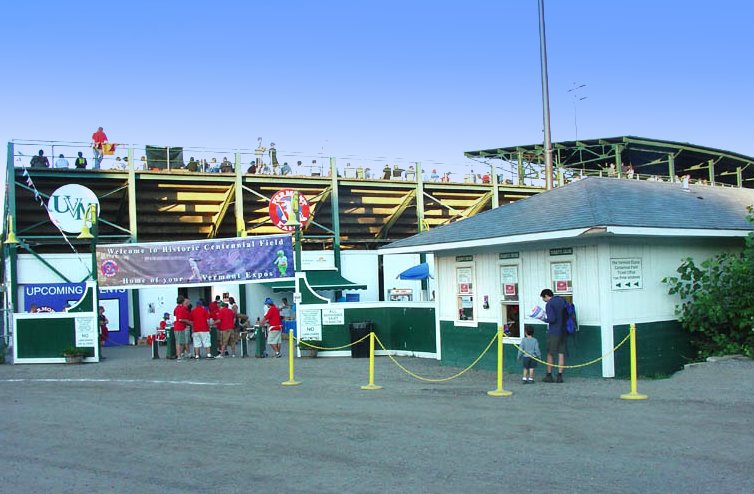
The Lake Monster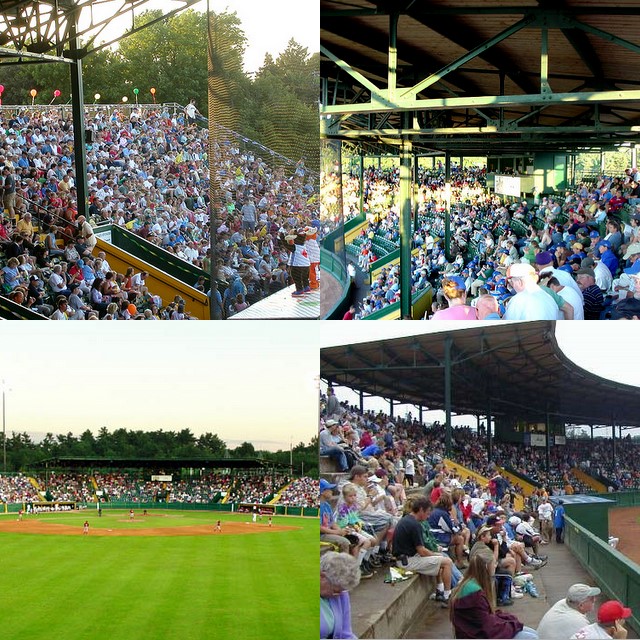 s play at Centennial Field, in Winsooki, just outside of Burlington. I asked C.J. if Centennial was "up to date" compared to the other New York - Penn league facilities. "Not many people are aware of this, but Centennial Field is one of the oldest baseball parks in the whole country," C. J. told me. "This year we actually celebrated Centennial Field’s 100th anniversary. As you may guess, it lacks some of the bells and whistles of the newer parks. However, what it lacks in amenities it makes up for in tradition and charm and it’s really a great place to see a ballgame." Some of the newer parks in the league are really "mini" major league parks. C.J. likes Keyspan Park in Brooklyn and the new Medlar Field on the campus of Penn State Univerisity, new home for the State College Spikes.
Justin Maxwell, who played for Ver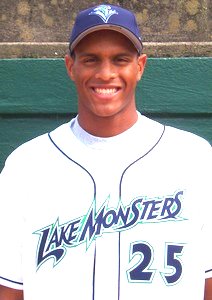 mont last year, has long been a player that has intrigued me. A product of the University of Maryland, Maxwell missed much of his college career to injuries, and was drafted on talent and not accomplishments. I asked C.J. how Maxwell did last season. "Justin was able to play in 74 of the teams 76 games this past season, so it seems as though he is over any injuries he may have had in the past. Justin’s speed and ability to steal bases was one of his attributes that impressed me the most. He lead our team this past season with 20 stolen bases and his presence on the base paths helped disrupt pitchers trying to get out of a jam."
Though t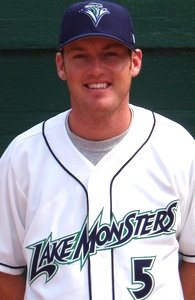 he won-loss record didn't reflect it, the team had many quality players on the roster in 2006. I asked C. J. if there were any players who intrigued him. "The player our fans really got behind here in Vermont that Nationals' fans could see relatively soon is Jack Spradlin. He falls under the category of being a one of those crafty lefties like Tom Glavine or Jamie Moyer that work both sides of the plate. We had a few players who could be catching
  the eye of Nationals fans within a few years. Mike Daniel and Justin Maxwell really performed well and have a strong shot of making it to the big club in a few years."
I was curious as to who in the Nationals front office Mr. Knudsen talks to on a regular basis. He told me that most of his communication is with with their Director of Player Development, Andy Dunn. Matters most discussed, C. J. says, are "upcoming player transactions" as well as "potential moves affecting our team." Curious if he was able to just pick up the phone and talk to Jim Bowden anytime he wanted, Knudsen replied, "There is rarely a time when it is necessary for me to speak with Jim Bowden because I am usually in contact with Andy Dunn. The Nationals are great to deal with though and I’m sure Jim would be more than happy to speak with a representative of any one of the Nationals affiliates."
Finally, I was curious about who calls the shots regarding who plays and how often. Could Dunn call and say, "play so-and-so until I tell you to stop?" I mean, how much autonomy does a short-season manager really have? A lot, it seems. "The nature of our affiliation with the Nationals as well as the all other clubs is we provide their young players a place to play. The decisions in terms of playing time are made by the manager hired by the parent club. Our manager works closely with the Nationals to come up with plans to help develop their minor leaguers to the best of their ability, and sometimes it may take putting a player in one spot in the lineup and leaving him their for a full season no matter how he plays to help with his development."
What drew me to the L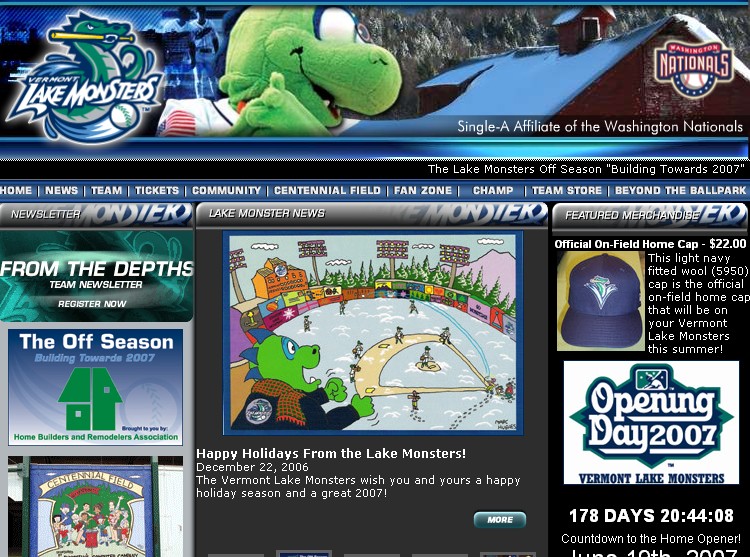 ake Monsters for my first "Meet The G.M." story was their website. Usually, the lower the affiliation, the smaller the league, the less attractive the team's website is.
Not the Lake Monsters.
Their website, reinvented last year, is full of all kinds of eye candy and easy to use links. Sure, they are trying to sell their products (and I highly reccomend taking a look at their on-line store -- they've got some great stuff), but it's done tastesfully and doesn't give you the sense that sales is the only reason the website is there. Take a few minutes and learn about the team, their players, history, Centennial Field and -- most importantly -- their future.
One day very soon, the Lake Monsters are going to return to the top of the New York - Penn League, and hopefully, they'll get there with Nationals' talent.
If you love the Nationals, love the Lake Monsters too. Say thank you for being part of the Nationals' community by visiting their site and introducing yourselves to all the team has to offer.
About the G. M.: 2006 will mark C.J.'s eleventh season in professional baseball. He started his career in 1995 as an intern with the Vermont Expos, before graduating from K eene State College in 1996 with a B.S. in Physical Education, specializing in Sport Management, and achieving a minor in Business Management.
Knudsen rejoined the Expos in 1997 as the Assistant General Manager and was promoted in 2000 to his current position of General Manager. During Knudsen's tenure, the Lake Monsters have continued to draw over one-sixth of Vermont's population to Centennial Field each summer. In 2003, he was recognized for his work by receiving the NY-Penn League Executive of the Year award. He also serves as the Executive Director of the NY-Penn League Charitable Foundation, which gives back to the hometowns of the league's teams. Knudsen was born in Poughkeepsie, NY and raised in Jonesville, VT. He graduated from Rice Memorial High School in 1992. He spends his "limited" free time with his family and friends, fishing, skiing, running marathons, and occasionally playing a bad round of golf.
EXCITING NEWS!
 [December 22nd] -- I have just completed an e-mail interview with Vermont Lake Monsters' General Manager C. J. Knudsen and will post his answers on Saturday.
Because readership declines on the weekend (I guess all of you have a life), I wanted to give you a heads-up so you wouldn't miss it.
The Beltway Boys is doing a series of "Best of Awards" and we're starting with the Lake Monsters.
If all goes well, we'll be able to publish interviews with the remaining affiliate's general managers over the next two weeks.
Don't miss the interview. I'm sure you'll enjoy it.

SUTTON LIKELY NEW 'MAN BEHIND THE MIC'
 [December 22nd] -- It looks like it's going to be Don Sutton.
Reports out of Atlanta are suggesting that a deal to pair Sutton with play-by-play man Bob Carpenter is all but done, with only the number of years yet to be determined.
Now, I've been reading the Nationals message boards and from what I can tell, Sutton wasn't ... um .. how do I say it .... their first choice. Indispersed between the "Steve Stone is much better" comments were an inordinate amount of "bad hair" jokes.
Look, I had no qualms about Tom Paciorek remaining in the broadcast booth. I lived in Seattle when he had is only good years in the major leagues. He was a kidder then, he was a kidder in the booth last year. The schtick got a little old at times, but overall I appreciated his work.
Don Sutton is the antithesis of Paciorek. If the two were singers, Paciorek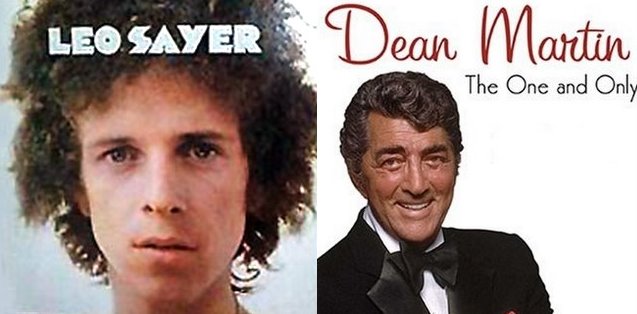 would be Leo Sayer and Sutton Dean Martin (if you're not old, I don't expect you to get the analogy). Sutton has a dulcet demeanor that relaxes some while putting others to sleep. He was the perfect foil for Skip Caray's nasalosity (if that wasn't a word, it is now). Having been a Braves' fan during that primordial period between the Senators and Nationals, I have heard Sutton broadcast nearly a thousand games, and I like him. I think he'll be a good foil for Bob Carpenter.
Do I have some issues with the guy? Sure, but they came after the Braves stopped being my team. I'll never forget that first game that the Braves played at RFK. Both Sutton and Pete Van Wieren gently turned their noses up at both RFK and the Nationals. Sutton was used to winning, and working out of a top-notch ballpark. The Nationals, and their stadium, offered neither. His arrogance and disdain were obvious.
I have a couple of questions regarding this move. Why did he choose the Nationals? Regardless of his detractors, Sutton is a brand-name broadcaster, someone who brings notoriety with him. I'm sure that o ther teams tried to sign him once TBS jettisoned Braves Baseball. Second, until last year, Sutton never had to broadcast a loser, allowing him that flowing demeanor that made him seem convincing while peddling berber for "Carpets of Dalton." Will he be able to accept being part of a loser, at least for a few years?
[Note: Basil @ Federal Baseball is, as usual, smarter than me. Here in part a comment he left: "Slight nitpick, though I think it might have bearing here: Sutton has done TV work for a loser, the 1989-90 Atlanta Braves ..." Thanks Basil for being my editor. The check's in the mail for your servies :) And Happy Holidays to you too, my friend. You are the best.
The Nationals, or MASN, or whoever it was, made a wise choice from many wise choices. Steve Stone would have done just as well. I think the team saw a little too much of John Wetteland in Paciorek, and were going for a more professional environment.
And that's fair.
Nick Johnson & The Yankees: You know, I'm still not convinced that Nick Johnson is going to be the Nationals' first baseman in 2007. The Yankees are concerne d enough about their situation at first base that they have been talking to free-agent second baseman Mark Loretta about his willingness to move to first.
I'm sorry, but I don't see the fabled New York Yankees taking the field on opening day with Mark Loretta at first. I could see a deal that might bring Braves' first baseman Adam LaRoche to New York (though there is no indication of that at this point), and I could certainly see a deal that could return former Yankee Johnson to New York. Bill Ladsen often gives us hints in his "mailbag" column as to the team's future. In repsonse to my question, he said, "I think it's time to play such young players as [Kory] Casto and Larry Broadway."
Larry Broadway? Where did that come from? Throughout this off-season, no one has even hinted at the possibility that Larry Broadway was going to be given any realistic shot at making the team. I have to wonder, then, if Broadway's name isn't being floated to Nationals' fans as their possible first baseman for 2007.
And if Johnson is going somewhere, wouldn't it make sense for Johnson to be heading for New York?
Just thinking out loud.