HOW GOOD CAN THE NATIONALS BE?
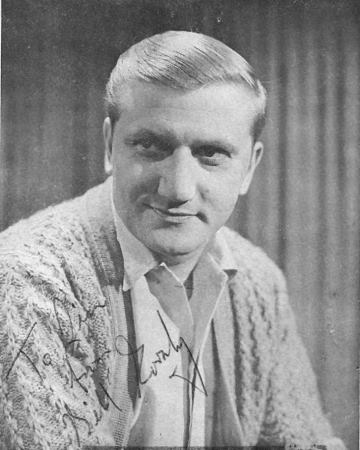 I was eight years old when I attended my first Senators’ baseball game. It’s not like I wanted to or anything. But I was a fan of Channel five’s “Countdown Carnival” with Bill Gormley, and he asked me—through the television of course—to have a carnival for Muscular Dystrophy. We didn’t get anything for doing it and we didn’t get to keep the money.
But we did get tickets to Senators’ games. Lots and lots of tickets. And so I went.
We went on a hot July day in 1964 and I had to sit through a double header against the Baltimore Orioles. It was my first visit to D.C. Stadium and I was surprised to see so many seats and so few people filling them.
The Senators lost both games, and looked pretty bad doing it. Baltimore had players like Boog Powell and Brooks Robinson and the Senators had Buster Narum and Steve Ridzik.
It turned out that most of the 8,000 fans that day came clutching “Countdown Carnival” coupons and really weren
 ’t interested in the game. In the late innings, an Oriole player fouled a pitch into the deep right field stands. It ricocheted around for a moment before settling on top of one of the seats.
It took a minute or two for a kid to causally walk over and pick it up.
After the second game, my brother propped his feet up against the seat in front of him and mopped his brow with a napkin. He looked almost sullen.
He gazed up into the sky and said, “I wonder what it would be like in this town if we had a real baseball team?”
Forty-five years later, my brother’s question still rings true. What would happen in this town if the Washington Nationals was a success on the field?
To be sure, Washington is not a “sports-first” town like Boston or New York. Certainly, we love our sports, but not above all else. But with the weight of the world on the city’s shoulders, children’s games sometimes just aren’t taken seriously.
But outside of the Washington Redskins—and I can’t for the life of me understand why they are governed by a separate set of rules—Washington teams have to win and win big to fill the city’s arenas and stadiums.
After three straight first place finishes, the Baltimore Bullets moved to Washington in 1973 in hopes of larger crowds and bigger paydays. Though they continued to win division crowns in Washington and they drew bigger crowds, they were just ninth in attendance
 in an 18-team league.
For the decade, the Bullets averaged a second-place finish and a tenth-place attendance mark. It got worse in the 1980’s and 1990’s. The MCI Center brought back some fans for awhile but the team’s attendance again faded into embarrassment.
Sure, Michael Jordan helped the Wizards to a second and third place attendance mark, but things again returned to normal. They were 21st out of 30 teams last season.
The Capitals fortunes aren’t much different. Over the years, the team has averaged about 15,000 fans per game which places them in the lower third of the league.
In their first six seasons in Washington, the expansion Senators had an average finish of 9th place (out of 10) and was 9th in attendance over that period. In 1967, they finished eighth and saw their attendance jump to sixth.
After a last place finish in 1968—they also finished last in attendance—the Senators won 86 games the next season and drew 916,000 fans, finishing sixth in attendance.
They were bottom feeders in both categories in their last two years in Washington.
I think we can make some pretty accurate assumptions based on these numbers.
First, the city will provide enough support—in good times and bad—to keep the Nationals a viable Major League franchise. Second, their attendance will be directly proportionate to how well the team is doing.
Finally, the revenue stream will never be big enough to allow the Lerner family to spend like the Phillies, Mets and Braves.
The Phillies and Mets have engines that can easily idle in the $100 million range. The Braves—thanks to decades of quality management—are able to reach the same level of success with $10 or $15 million less per season.
The Nationals, for now, will probably have a payroll ceiling in the low $80 million range with the ability to surpass it now and then for “that one last piece of the championship puzzle.”
Last season, the Nationals drew 1.8 million fans, about 22,000 per game. That’s about 31,000 per win. The Atlanta Braves have about the same size population to draw from and averaged 28,000 fans per win in 2009.
So if we use 30,000 fans per win in a season, the Nationals might expect the following attendance:
60 wins: 1,800,000
70 wins: 2,100,000
80 wins: 2,400,000
90 wins: 2,700,000
100 wins: 3,000,000
As much as we might like, the Nationals are never going to draw more than three million fans in a season as the Mets and Phillies continually do. They can’t afford to make mistakes and just say, “Oh well,” and move on.
When the Nationals sign players like Austin Kearns to $24 million contracts, it keeps the team from signing someone else who can really help the team.
Once Kearns’ contract came off the books, they Nationals signed all-star pitcher Jason Marquis for about the same amount of money.
When the next “can’t miss” prospect comes along—someone like Stephen Strasburg—the Nationals will be able to pony-up and spend the money. But be clear: this won’t happen often.
The Nationals can one day be a championship caliber team. But they must be better than their Eastern Division rivals in almost every area to get there.
They must make personnel decisions as well as the Marlins. They have to produce a consistently good team year-in-and-year-out like the Braves. They have to spend like drunken sailors when the situation calls for it, like the Mets.
And they have to be able to retain their stars like the Phillies.
With Mike Rizzo and Stan Kasten running things, all of those goals are easily within reach. The Lerner’s pockets are deep enough, the new ballpark is good enough, and the city they play in is certainly big enough.
Everything has to go well from here on out for the Nationals to win. The question is, will it?
I think that, yes, it will.

DEREK NORRIS WINS "MiLBY AWARD" AS BEST HITTER IN CLASS-A BASEBALL
 Derek Norris, the Washington Nationals come-from-nowhere prospect, followed up an impressive rookie-league season in 2008 with a breakout year for the Hagerstown Suns and has won the “MiLBY” Award for being the best hitter in all of Class-A baseball.
Norris, 20, batted .286-23-84 in 437 at-bats for Low-A Hagerstown. Translated into a 550 at-bat major league season, his stats look even better: 160 hits, 38 doubles, 30 home runs and 107 RBI along with a .413 on-base percentage and a .513 slugging percent.
Norris was on pace for a .320-40-120 finish in early July but South Atlantic League pitchers stopped pitching to him. He would go days without seeing a fastball. By August, he stopped chasing bad pitches and took what the pitchers gave him, which was a whole lot of walks.
And he did all that while catching 126 games, having never before played in more than 70 games in a season.
Johnny Bench, perhaps the greatest hitting catcher of all time, batted .259-27-80 with a .301 on-base percent at the same age. No, he’s not Johnny Bench, but his minor league statistics do compare favorably.
Before the start of the 2009 season, Nationals’ fans were enthralled with the team’s bevy of first-round picks, players like first baseman Chris Marrero and pitcher Ross Detwiler.
Unless you were a total baseball geek, you never heard of Derek Norris.
But most everyday major leaguers aren’t taken in the first round of the amateur draft. So while we watch and wait for our “name” prospects like Detwiler and Marrero and Drew Storen and Stephen Strasburg to make it to Washington, we miss those late round picks that come from nowhere to integral parts of the team.
John Lannan was an 11th round selection in 2005. Craig Stammen was selected a round later the same draft. Josh Willingham was a 1
 7th round selection by the Marlins in 2000 and Nyjer Morgan was a 33rd round afterthought by the Pirates two years later.
Is it no wonder then that many Nationals’ fans were wondering where in the world Derek Norris came from last season.
The Washington faithful were so elated with the team's 2007 first-round selection of pitcher Ross Detwiler that the other players taken that day ended up being little more than blurry afterthoughts.
Oh sure, second-round pick Jake Smolinksi and third rounder Steven Souza were known commodities, but by the fourth round you often find organizational-type players who fill holes in the minor league system until someone better comes along.
From 1999 through 2004, the best players drafted in the fourth round were pitchers Jonathan Papelbon and Cliff Lee. The rest were mostly marginal fourth-outfielder types and starting pitchers who ended up in the bullpen if they even made it to the major leagues at all.

Only one out of four players drafted in the fourth round from 1999-2004 made it to the major leagues, and less than four percent became everyday players. It’s no wonder that no one took notice of Derek Norris when he was selected as the 130th player in the 2007 amateur draft.
He was just another high school catcher with little hope of a major league career.
Or so we all thought.
Norris grew up in Goddard, Kansas, a Wichita bedroom community. He was named to the 2007 Louisville Slugger All-American team and was selected as Gatorade's Baseball Player of the Year for the state of Kansas.
He had committed to play for nearby powerhouse Wichita State, and when he was drafted by the Nationals, he began to prepare for his first semester in college. Norris didn't think he would ever sign with Washington and wasn’t sure he really wanted to.
He believed he was a second-round baseball player, and expected second-round money, something he was unlikely to get from the then tightfisted front office.
But one night, Nationals’ representative Bob Boone showed up at the Norris family’s front door. A fellow catcher, Boone painted pictures of his days in the major leagues, talked about his seven Gold Gloves, and flashed enough of the Lerner family's money to convince Derek to sign with the Nationals.
Did the Nationals give him the second-round money he wanted?
"Well, I got what I think I need," said the young catcher when the signing was announced.
Being diplomatic goes a long way in Washington.
He spent his first season with the Gulf Coast Nationals, which better resembles a baseball academy than a professional minor league club. There are wake-up calls, bed checks, and games played before a few dozen fans during the hottest part of Florida's day.
I guess you can add rookie baseball players to the old saying that, "Only mad dogs and Englishmen go out in the noon-day sun."
The 18-year-old didn't do terribly well during his first professional campaign, hitting just .203-4-15 in 123 at-bats. His .344 on-base and .382 slugging percentages weren't very good either. He struck out 30 percent of the time while walking just 17 percent.
However, he showed good defense behind the plate, and he was promoted to the New York Penn League's Vermont Lake Monsters in 2008. And there, his offensive production changed like the New England seasons.
In just 227 at-bats, Norris batted .278-10-38, and had 11 stolen bases. He walked 63 times (an all-time Lake Monsters record) while striking out just 56 times.
He had a .463 slugging percentage, and his .444 on-base percentage led the league. He raised his walk rate from 16 percent of his appearances in 2007 to 22 percent in 2008 while dropping his strikeouts from 31 to just 24 percent.
Now look at his stats when expanded out to a 500 at bat season—the best way to contrast and compare with other players: .278—23 HR—85 RBI, 24 stolen bases, 144 walks and 128 strikeouts.
Wait a minute: 144 walks?
That's Barry Bonds territory.
Those statistics fit perfectly with his scouting report numbers from thebaseballcube.com (these are based on 100 possible points): Power: 90, Speed: 61, Contact: 26 and Patience: 100.
Wowsers. And he was a 19-year-old hitting against mostly 21 and 22-year-olds who had three or four years of college experience.
Double wowsers.
He was named that season to the Topps Rookie League All-Star Team, and Baseball America tapped him as Washington's No. 6 prospect. He was also designated as having the best plate discipline of all Nationals' prospects.
Norris' defense is getting better. He led the New York-Penn league in throwing out base runners with a 47 percent efficiency rate. That compares favorably with former National Brian Schneider, considered one the premier defensive catchers in baseball, who threw out 50 percent of base stealers that year.
Note that current Nationals’ catcher Jesus Flores, considered a solid defender, threw out just 36 percent of would-be base runners in 2008 and 42 percent last season.
Norris, however, acknowledges that his glove lags behind his bat. That makes sense, though, when you consider that he had never caught before his senior year in high school.
“My weakness is just catching the ball - simply just catching the ball," Norris said. "I'm not too worried about the passed balls (28 in 2009) or stuff like that; I've always done pretty well keeping in front of the ball. Mainly [I need to improve on] catching the ball and just staying focused."
Norris impressed team management last spring and was named the starting catcher for the Hagerstown Suns. There was a lot of pressure on the young man; it would be very difficult to duplicate his 2008 season, but if he didn't, he might find himself lingering in the low minors for quite some time.
Not to worry.
At the end of last season, South Atlantic League managers, general managers, sportswriters and broadcasters selected him as the “Most Outstanding Major League Prospect” in the 16-team league.
Norris will begin 2010 with the High-A Carolina League’s Potomac Nationals, but he should reach Double-A Harrisburg by the end of the season. If he continues to have success, a year at Triple-A Syracuse should have him being at least close-to-ready for the Nationals in 2011.
Will he compete with Jesus Flores and Ivan Rodriguez in Washington in a couple of years?
Interestingly, the Nationals aren't sure they are going to keep Norris as a catcher. He has shown great speed for a catcher (decent speed for an infielder) and there is talk of perhaps moving him to first base or a corner outfield position. He was a third baseman before moving behind the plate.
But Norris isn't thinking that way. "No, I'm not looking to change any positions. "I know my numbers look a little shaky at times, as far as passed balls and errors but I think that if I keep progressing from year to year I'll achieve what I want to achieve."
If Flores continues to improve and can stay healthy, Norris will have to move to another position if he stays with the organization. But if Jesus doesn't make it, look for Norris to be given a chance by 2012.
Derek Norris looks like the real deal. His manager at Hagerstown, former catcher Matt LeCroy, sees him as a "Russell Martin" type. And that's pretty good considering Martin--in just three seasons, has been to an All Star game and has garnered both a Gold Glove and Silver Slugger award. And LeCroy thinks he'll be an even better hitter.
JORDAN ZIMMERMANN, NOT STEPHEN STRASBURG IS KEY TO NATIONALS FUTURE
 In the days before the arrival of Stephen Strasburg, there was already a pitching prospect considered good enough to be the team’s future No. 1 starter.
His name was Jordan Zimmermann.
Zimmermann was a second-round supplemental pick obtained from the Chicago Cubs for the loss of Alfonso Soriano (who do you think the Cubs would rather have these days?).
He was a surprise pick out of Wisconsin-Stevens Point, a Division III program that played most of its season in the snow, muck, and mire of Wisconsin’s endless winter.
Zimmermann was a late bloomer. He went undrafted out of high school thanks to his unimpressive 87-mph fastball, but he blossomed in college. By his senior year, his fastball was up to 95-mph and he went 10-0 with a 2.08 ERA, leading the Pointers to a Division III championship.
In parts of three minor league seasons with Washington, Zimmermann went 15-5 with a 2.81 ERA. He allowed just 7.1 hits and 2.9 walks per nine-innings while striking out 9.9.
The kid from nowhere was the real deal.
He joined the Nationals on April 20th of last season and started 16 games, going 3-5 with a 4.63 ERA. In typical rookie fashion, he was stellar on some days and abysmal on others.
Half of his 16 starts were quality starts (six innings or more pitched, three runs or less allowed); he pitched 51 innings, gave up just 39 hits, walked 11, and struck out 44. He had a minuscule 1.93 ERA.
Those other eight starts, though, were ugly. Zimmermann gave up 56 hits and 18 walks in 40 innings. His ERA was 7.63.
But that was expected. Rookies struggle. Rookies learn from their mistakes. Rookies get better.
But Jordan Zimmermann didn’t have the chance.
In late July, Zimmermann began to feel some tenderness in his elbow, which quickly turned into significant pain. He saw the team doctor, who diagnosed the injury as a ligament tear that needed “Tommy John” surgery to repair. A second and a third opinion found the same thing.
Zimmermann had the surgery in August and afterwards, general manager Mike Rizzo reported that the team expected that their prize prospect would miss up to 18 months. Said Rizzo, “We'll have him back—full go—for spring training 2011, though he may pitch sometime in 2010. But you'll see the real Zimmermann in 2011.”
The loss of Jordan Zimmermann was a real punch-in-the-gut for the Nationals because he represented the team's hope for the future. But the despondency and dread that came with his surgery lasted all of two days.
Zimmermann had his surgery on August 15th of last season. Two days later, the Nationals came to terms with their No. 1 draft pick Stephen Strasburg, considered the best pitching prospect of the draft era.
Jordan who?
The Nationals will probably find four quality starters to lead the team in 2010. Jason Marquis and John Lannan will lead the rotation and Scott Olsen—if healthy—will be the team’s No. 3 starter.
That leaves two spots to fill and four quality pitchers available to fill them. Ross Detwiler had a 1.93 ERA in September after returning to his college mechanics, J.D. Martin and Craig Stammen pitched well in their rookie seasons, and Matt Chico—who is ready to return from his Tommy John surgery in 2010—was the Nationals’ best pitcher in 2007.
And in 2011, Stephen Strasburg will, without question, be in the Nationals’ rotation, likely as the No. 1 starter.
Zimmermann will be back in 2011 along with his three “plus plus” pitches (scout lingo for “out” pitches). But will he be as good as he was? Can a pitcher have his throwing elbow reconstructed and return a year later with his talent fully intact?
The Washington Nationals can make the jump from bad team to playoff contender without Jordan Zimmermann, but with him, they will have one of the best starting rotations in the National League in 2011.
Dr. Frank Jobe did the first Tommy John surgery on, strangely enough, Tommy John, in 1974. To that point, John had pitched 12 seasons, winning 124 games with a 2.94 ERA.
The surgery, which replaces the damaged elbow ligament with a forearm tendon, kept John out until the 1976 season. Over the next 12 seasons, he won another 153 games with a 3.35 ERA.
Certainly, the surgery worked for Tommy John. But was he the exception or the rule?
Since 1974, more than 160 pitchers have had Tommy John surgery and almost 10 percent of all pitchers on baseball’s 2009 opening day rosters had the procedure.
Just a sampling of pitchers who have had the surgery include: Rod Beck, Erik Bedard, Kris Benson, A.J. Burnett, Chris Carpenter, Ryan Dempster, Darren Dreifort, Adam Eaton, John Franco, Eric Gagne, Mike Gonzalez, Mike Hampton, Tim Hudson, Jason Isringhausen, Billy Koch, Jon Leiber, Matt Mantei, Russ Ortiz, Carl Pavano, Kenny Rogers, John Smoltz, Billy Wagner, and Kerry Wood.
Let’s look at a handful of those players and see if we can get a feel for what the Nationals—and Jordan Zimmermann—have to look forward to.
When the surgery was announced last August, Rizzo said that the surgery’s success rate, having the pitcher return to pre-surgery form, is 85-90 percent.
A.J. Burnett (2003) Before: 30-32, 4.84 After: 70-53, 3.83
Chris Carpenter (2003) Before: 49-50, 4.83 After: 68-24, 2.91
Ryan Dempster (2004) Before: 52-56, 4.77 After: 36-34, 3.60
Denny Neagle (2004) Before: 124-92, 4.24 After: Never Returned
Mike Hampton (2005) Before: 138-101, 3.97 After: 10-14, 5.12
Carl Pavano (2006) Before: 61-64, 4.27 After: 19-14, 5,18
John Smoltz (2000) Before: 157-113, 3.35 After: 56-42, 3.28
Jason Isringhausen (99) Before: 17-18, 4.43 After: 28-32, 3.20, 293 saves
Matt Mantei (1996) Before: 1-1, 5.34 After: 13-17, 3.90, 93 saves
Paul Byrd (2003) Before: 52-46, 4.39 After: 57-50, 4.42
Kerry Wood (1999) Before: 13-6, 3.40 After: 67-58, 3.71, 54 saves
For the most part, pitchers who have undergone Tommy John surgery have returned to have long and productive careers. With a few exceptions, hits, walks, and strikeouts per-nine innings have remained constant. Most of the pitchers who never came back from the surgery or pitched poorly were in the later stages of their careers and in their mid-30’s.
Some, like Billy Koch and Kerry Wood, thought they were better and stronger afterwards. Both claimed to have added speed to their fast balls. Koch claimed to have reached 108 MPH on the radar gun and Wood believed his fastball was faster and had more movement.
To save wear and tear on their elbows, John Smoltz and Kerry Wood became closers (though Smoltz returned to the starting rotation after four dominant seasons in the bullpen). Others, like Matt Morris, spent a year in the bullpen building their strength before returning to the rotation.
Although I would never have thought this at the time, Jordan Zimmermann’s surgery may have been a blessing in disguise for the Nationals. If Zimmermann was available in 2010, I seriously doubt that the team would have signed free agent Jason Marquis and Detwiler, Stammen, and Martin wouldn’t have had the opportunity to gain valuable major league experience.
The Nationals will have formed a solid rotation in 2010 without Stephen Strasburg and Jordan Zimmermann. Come 2011, they will add those two starters, the two premier young pitchers in the National League East.
Think about this for a moment. In 2011, the Nationals will have a rotation that will feature two legitimate No. 1 starters in Stephen Strasburg and Jordan Zimmermann. They will also have Jason Marquis (13-10, 4.17 over last three seasons) and John Lannan (3.90 career ERA).
The Nationals’ No. 1 starter in 2009 will be the team’s No. 4 starter in 2011.
If Scott Olsen shows that he is healthy next season, he will likely be the fifth starter in 2011. If not, the Nationals have Craig Stammen, J.D. Martin, Matt Chico, and Ross Detwiler to fill that final spot.
To become a truly competitive team, the Nationals just need Jordan Zimmermann to return as a serviceable pitcher. But if he is one of the 90 percent who come back fully healed, the Nationals will have a real chance to make the playoffs in 2011.
For five seasons, Nationals’ fans have hoped that the team would one day find a scenario that would finally lead the team out of the muck and mire of last place and make a run at the division crown.
Jordan Zimmermann is that scenario. One day, the Mets, Phillies, Braves, and Marlins will fly into Washington and shake their collective heads at the prospect of facing Strasburg and Zimmermann on consecutive nights.
And all will finally be well in Washington, D.C.
JASON BAY CONTRACT WILL MAKE IT HARDER TO RESIGN ADAM DUNN
 If I were Nationals’ General Manager Mike Rizzo, I’d be driving over to Adam Dunn’s house right now, contract in one hand and pen in the other.
And I’d be practicing my groveling.
Former Red Sox outfielder Jason Bay has agreed to a four year, $66 million contract. That’s $16.5 million per season for the 30 year old.
Dunn, a year younger at 29, is in the last year of a two-year contract that pays him $20 million, or $10 million per season.
Is Jason B
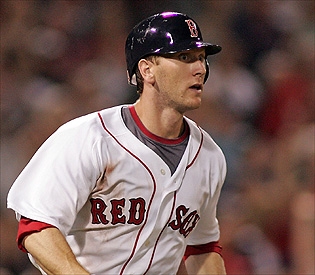 ay worth $6.5 million more per year than Adam Dunn?
 In 922 career games, Bay has hit 185 home runs and driven in 610 runs. In 1,290 games, Dunn has hit 316 homers and driven in 777.
But take a look at how they compare over their last two seasons:
Batting Average
Bay: .277
Dunn: .252
Bay: 32
Dunn: 30
Triples
Bay: 4
Dunn: 0
Homers
Bay: 34
Dunn: 39
Bay: 110
Dunn: 106
On base percent
Bay: .378
Dunn: .392
Slugging percent
Bay: .529
Dunn: .527
OPS
Bay: .907
Dunn: .913
Home run per at-bat:
Bay: One every 21.1 at-bats
Dunn: One every 13.9 at-bats
RBI per at-bat
Bay: One every 6.3 at-bats
Dunn: One every 5.6 at-bats
Bay has the better batting average but Dunn has the superior on-base percentage. Dunn hits more homers but Bay drives in a few more runs.
Over the course of a season, Bay allows 10 more runs to score than the average left fielder, the same as Dunn. Dunn’s range factor is 1.90 while Bay’s is 1.91 (the league average is 1.97).
Like I said, just plain terrible, both of them.
Bay is a year older than Dunn, has less power, gets on base less often, hits a few more singles, and drives in a few more runs but needs more at-bats to do it. And both can’t field worth a darn.
And he’s worth $6.5 million more per year?
I find this almost funny to say out loud, but the New York Mets had to overpay to get a badly needed bat.
But to be fair, the Nationals underpaid Adam Dunn two seasons ago. If he were to re-enter the free agent market next fall, he’d likely get $13-14 million per year. So now is the right time to work out a long-term extension to keep Dunn in Washington for another three or four years, say for about $12.5 million per year.
But Rizzo had better do it quickly, or Dunn just might say, “You know, I think I’ll wait until the season is over before talking about a new contract.” If that happens, he’ll never return to Washington.
Are you on the interstate yet, Mike?
REBUILT BULLPEN COULD LEAD TO 2010 TURNAROUND
 It sure is going to be fun watching the Washington Nationals play baseball now that the adults are in charge.
Former general manager Jim Bowden would address a specific need by signing dozens of players in the hopes that one of them might make the team.
More often than not, however, the Nationals never got any better. He was like a shotgun, hoping that one pellet out of a thousand might reach its target.
Mike Rizzo, on the other hand, is more like a rifle, where only one shot is needed to hit the target. Rizzo identifies the need and fills it, calmly, quietly, and efficiently.
In need of a centerfielder since 2006, Bowden paraded a collection of players through the outfield for three years before being forced out this past spring. Alex Escobar, Brandon Watson, Nook Logan, Ryan Langerhans, Willie Harris, and Lastings Milledge all gave it a try.
None succeeded.
It took Rizzo five months and one trade to fix the problem when he acquired Nyjer Morgan from the Pirates last July. The Nationals were 36-76 without Morgan in 2009 and 22-26 with him.
Bowden’s answer to the team’s ongoing bullpen problem last winter was to sign a bunch of castoffs, pitchers like Ron Villone and Julian Tavarez, Kip Wells and Wil Ledezma.
Only Villone survived the season, and really, with a 4.25 ERA and five walks per nine-innings, he shouldn’t have.
The Nationals have had one of the worst bullpens in baseball since 2006. But Mike Rizzo fixed in a month what Jim Bowden couldn’t fix in four years.

Rizzo has completely reworked the bullpen for 2010. Last season, Bowden’s Opening Day bullpen consisted of Joe Beimel, Joel Hanrahan, Mike Hinckley, Wil Ledezma, Saul Rivera, and Julian Taverez, who were a combined 5-18, 6.87 in 155 innings for the Nationals.
Though Rizzo has yet to name his bullpen for next season, the Nationals have six quality arms and six positions to fill. Let’s take a look those players and see how they might help the Nationals in 2010.
Note: Hits, walks, and strikeouts per nine innings will look like this: 8.8/3.3/6.3. Batting average, on-base, and slugging percent will appear as .274/.355/.455. IRS is the percentage of inherited runners that are allowed to score.
Tyler Clippard: 4-2, 2.69 5.4/4.8/10.0 .172/.284/.349 IRS:37%
Clippard was considered the New York Yankees premier minor league pitching prospect before Joba Chamberlain and Phillip Hughes came along. He was traded to Washington following the 2007 season for relief pitcher Jonathan Albaladejo .
Clippard has three quality major league pitches (fastball, curve, and change) and can get hitters out with all of them. He sets up his curveball with his fastball which tops out at 91 mph. He is unhittable when his control is perfect, but without a dominant fastball, he gets into trouble when he’s forced to throw a lot of 2-0 and 3-1 pitches.
He walks too many (4.8 per nine-innings) but that is because he trusts his location so much that he is willing to “paint the black” on a 3-2 pitch.
Clippard was by far the Nationals’ best relief pitcher in 2009.
Jason Bergman: 2-4, 4.50 9.4/4.7/7.5 .267/.375/.450 IRS:14%
The Nationals have been trying to decide what role Bergman should play since they moved to Washington five seasons ago. He appeared solely in relief in 2009 and will likely be the long reliever in 2010.
In 14 of his appearances, the Nationals were three runs or more behind when he entered the game, and he did a credible job of keeping the team close.
He’s not a great pitcher, but Jason Bergman is certainly good enough to be the team’s long reliever.
Eddie Guardado: 1-2, 4.46 9.2/3.5/4.7 .267/.344/.479 IRS:47%
Guardado, at 38, isn’t the reliever he once was, but he is still fairly effective. From 2002-2005, he averaged 35 saves and a 2.84 ERA. Don’t let the minor league contract fool you; he’ll be in the bullpen in 2010.
He’ll have a limited role with Washington, probably as the designated lefty-against-lefty specialist. Against left-handers, Guardado’s batting average/on-base percent/slugging percent-against was just .229/.268/.349. Ron Villone, last year’s left-handed specialist, was hit hard by lefties, allowing a .293 batting average and .396 on-base percentage.
Guardado is an upgrade over Villone.
Sean Burnett: 1-1, 3.20 5.0/4.6/7.1 .157/.265/.281 IRS:17%
You would be hard-pressed to find a reliever with better statistics anywhere in the National League last season. A .157 batting average-against? You have got to be kidding.
Burnett is a terrific ground ball pitcher with great command. He has a sharp curveball and a solid change. He gets righties and lefties out equally well. His walk ratio is a little high but he gives up half the number of hits of a typical reliever, so things even out pretty well.
Brian Bruney: 5-0, 3.92 8.3/5.3/8.3 .243/.347/.412 IRS:31%
Bruney was Mike Rizzo’s first move of the offseason, obtaining the Yankee’s setup man for a Rule V draftee obtained a few days later.
His numbers were impressive last year, but he’s been even better over his last two seasons, going a combined 8-0, 2.93. Bruney has a fastball that can reach triple-digits, but he’s at his best when he’s throwing in the mid 90’s with good movement. He has an outstanding curve and a good change.
He’s described as having a bulldog mentality, someone who won’t back down with the bases loaded in the bottom of the ninth with no outs and a 3-2 count. The Nationals haven’t had many of those types of pitchers over the years.
Hopefully, he’ll be a leader in the bullpen and as Matt Capps’ setup man.
Matt Capps: 3-5, 2.58 7.5/1.4/7.o .226/.263/.339 IRS: 42%
The numbers above reflect the average of Capps’ two seasons as closer with the Pittsburgh Pirates prior to 2009. He imploded last season, going 4-8, 5.80, allowing four more hits per nine innings, twice the walks and fewer strikeouts. He allowed 57 percent of inherited runners to score.
It’s not that I’m being nice to Capps, I’m being fair. He suffered extensive elbow problems last year, causing him to miss several games in May and was day-to-day through the end of June. Mike Rizzo is betting—and I agree—that Capps’ 2009 season was an anomaly caused by injury.
In his first two years as closer, Capps allowed less than a runner per inning. His blown save rate was very low, comparable with Chad Cordero in 2005 and 2006. His fastball exceeds 95 mph with good movement. His secondary pitch—his curve—is above average but he seldom uses it, relying instead on his heat.
Capps has amazing control. For his career, he has allowed just 1.7 walks per nine-innings and has a fastball to walk ration over 4:1.
Capps is not a great closer, but he’s a very good one. He signed a one-year contract, which should give Drew Storen enough time to mature and be ready for 2011.
The Washington Nationals will be a better team in 2010, thanks to a much better starting rotation. But without a solid bullpen, all of those late-inning leads just won’t matter. From the first man out of the bullpen to the last, the team will get quality innings from quality relievers.
Bullpens don’t win games for teams; they keep them from losing. At this point, I’m guessing they will keep the losses under 83.
And it could even get better.
J.D. MARTIN IS JOHN LANNAN REDUX
 [October 25th] -- In 2007, John Lannan came out of nowhere.
An 11th-round afterthought in 2005, Lannan climbed the minor league ladder quickly, going a combined 12-3, 2.87 before finishing the season with the Nationals where the 22-year-old went 2-2, 4.15.
Since then, Lannan has won 18 games and been the team’s presumptive ace.
Man, if the Nationals could find just one more pitcher to come out of nowhere, 2010 could be a fun year to watch.
Ladies and gentlemen, meet J.D. Martin, the next John Lannan.
It’s not that Martin wasn’t a known commodity in the baseball world. The Cleveland Indians chose the high school pitcher in the first round of the 2001 amateur draft, using their compensation pick for the departed Manny Ramirez.
Martin had tremendous control and a good fastball with movement when he began his minor league career. In his first two seasons in the Indians organization, he went a combined 19-6, 3.17, allowing 2.5 walks per nine innings while striking out 11.
In other words, he was dominant.
However, his strikeouts all but disappeared in 2004 as he toughed through an 11-10, 4.39 season in the high-A Carolina League. His strikeouts per nine innings dropped to six and his arm felt sore towards the end of the season.
There were signs of an arm injury, but it was hoped that an off-season of rest would help Martin regain his strength.
And it seemed to. Ten games into the 2005 season, Martin was 3-1, 2.38 and was again striking out more than 10 batters per nine innings. However, the sore arm returned and he was forced to under go reconstructive “Tommy John” surgery that July.
He returned late in 2006, and over the next three years crafted a record of 15-8, 3.31, with 7.5 strikeouts per nine innings.
However, in 2008, his last year with the Indians, he was primarily a reliever; the team didn’t feel he was good enough, or strong enough, to be a starter any more.
Believing that he could still be an effective starter, Martin left the Indians as a six-year minor league free agent and signed with the Nationals last winter.
He quickly became the team’s premier minor league pitcher, going 8-3, 2.66 in 15 starts with Class-AAA Syracuse.
But he was not the same pitcher anymore. Martin began pitching to contact and threw strikes, lots of them. With Syracuse, he struck out six per nine innings while walking just one, an amazing walk to strikeout ratio at any level.
In nine minor league seasons, Martin had compiled an outstanding record of 56-28 with a 3.29 ERA and yet he’d never had the opportunity to pitch in a major league game.
That changed, however, when the Nationals’ Scott Olsen was lost for the season with a arm injury and the team desperately needed a fill-in arm.
Enter J.D. Martin.
In 15 starts in 2009, Martin went 5-4 with a 4.44 ERA. He showed he had the ability, the tenacity, and the desire to succeed at the major league level. He didn’t do any one thing particularly well, yet by the time he walked off the mound, he more often than not had his team in a position to win.
But let’s look at his internal numbers and compare then with the aforementioned Lannan, the Nationals’ best starter:
Hits per 9 innings
Lannan: 9.2
Martin: 9.9
Homers allowed per 9 innings:
Lannan: 1.0
Martin: 1.6
Walks per 9 innings:
Lannan: 3.0
Martin: 2.8
Strikeouts per 9 innings:
Lannan: 3.9
Martin: 4.3
Baserunners per 9 innings:
Lannan: 1.35
Martin: 1.42
In virtually every category of statistical significance, the two were nearly identical. It would seem that the Nationals have indeed found their second out-of-the-blue starting pitcher.
But the news just gets better, just as Martin did as the season progressed.
In his first four starts, Martin gave up 13 runs, 24 hits, and five walks in just 16 innings. Since then, however, he might have been the best pitcher in the rotation. Take a look at Martins numbers compared to Lannan’s in their last 11 starts:
Innings Pitched
Martin: 60
Lannan: 63
ERA
Martin: 3.71
Lannan: 4.95
Hits per nine innings
Martin: 10.1
Lannan: 10.2
Walks per nine innings
Martin: 3.0
Lannan: 2.6
Strikeouts per nine innings:
Martin: 2.1
Lannan: 2.0
Batting average-against:
Martin: .264
Lannan: .263
On-base percentage allowed
Martin: .330
Lannan: .332
Slugging percentage allowed
Martin: .455
Lannan: .437
Percentage of strikes thrown:
Martin: 63%
Lannan: 63%
Line drives allowed
Martin: 17%
Lannan: 25%
Team record in starts
Martin: 8-3
Lannan: 4-7
Once Martin gained some experience at the major league level, he was able to stay with Lannan pitch-for-pitch over the last third of the season. So what’s the difference between team “ace” John Lannan and Martin?
About 55 career starts.
Should Martin repeat his rookie effort in 2010, the Nationals will have two very solid—though not spectacular—young pitchers who should be the No. 3 and 4 starters for the team once Stephen Strasburg makes it to the big leagues and Jordan Zimmermann returns from injury.
Most of us have scoffed at former general manager Jim Bowden’s penchant for signing minor league pitchers off the scrap heap. It just never seemed to work.
This time, however, Bowden was right.
J. D. Martin might not be a sexy choice for the rotation in 2010, but he is a solid choice. He outpitched the team ace for most of 2009; what else does he have to prove?
NATIONALS FUTURE PEGGED TO AMATEUR DRAFT
 After years of neglect and abuse, the Washington Nationals’ farm system is beginning to look like, well, a farm system again.
When the Montreal Expos moved here in the fall of 2004, the farm system was completely bare; all of the best players—Cliff Lee, Brandon Phillips, Grady Sizemore, Jason Bay—had been traded by then general manager Omar Minaya.
Of that class of 2004—those having never played in the majors—not a single player has made it to the major leagues as a productive full-time player. Just two, shortstop Ian Desmond and pitcher Colin Balester, might one day become credible major leaguers.
The Philadelphia Phillies, on the other hand, had 10 players in 2004 that are today quality major leaguers: Ryan Howard, Placido Polanco, Vincente Padilla, Pat Burrell, Gavin Floyd, Ryan Madson, Carlos Ruiz, Cole Hamels, Michael Bourn and Kyle Kendrick.
Now, there is no guarantee that Chris Marrero, Josh Smoker, Michael Burgess, Stephen Strasburg, Drew Storen and Destin Hood will even make it to the major leagues, little alone make a difference.
But one thing is for sure, the last three or four drafts couldn't be any worse than what this franchise has had prior to 2005.

Would you have liked the 2009 Washington Nationals to look like this?
CF— Curtis Granderson
RF—Aaron Rowand
2B—Chase Utley
3B—David Wright
LF—Garrett Atkins
CA—Brian McCann
1B—Prince Fielder
SS—Brian Roberts (original position)
And this starting rotation wouldn't have been too bad, would it?
Barry Zito
Jeremy Bonderman
Dan Haren
C.C. Sabathia
Cole Hamels
I would think that this version of the Washington Nationals would have played well into October.
The Nationals wouldn't have had to trade for, or sign as free agents, any of these players. They only needed to choose them in the baseball amateur drafts from 1998-2002. Each player listed was available in one of the first four rounds of each draft after the Expos made their selection.
Incredible, huh?
In the first round of the 2000 draft, the Expos chose pitcher Justin Wayne , bypassing Chase Utley and outfielder Rocco Baldelli. In 2001, with Aaron Heilman, Bobby Crosby, Jeremy Bonderman, Noah Lowry and David Wright waiting to be chosen, Montreal went with pitcher Josh Karp .
In 1998, infielder Josh Mc Kinely was chosen ahead of Brad Lidge, Jeff Weaver, C.C. Sabathia and Aaron Rowand. Three rounds later, first-baseman Clyde Williams was taken by the Expos instead of Barry Zito and Mike Maroth.
2002, however, was the worst .
With one of the top picks in the draft, Montreal chose Clint Everts , a pitcher who is today still toiling in the minor leagues. In that same first round, however, they could have chosen Zack Greinke, Prince Fielder, Jeremy Hermida, Khalil Green, Scott Kazmir, Nick Swisher, Jeff Francoeur or Matt Cain.
There can be only two possible conclusions for the team picking lumps of coal for their Christmas stockings when candy and toys
 were still available.
Either general managers Jim Beattie (1995-2000) and Omar Minaya (2001 - 2004) were stupid and couldn't find a major league prospect in a barrel of fish or they were told by ownership to draft "signable" players rather than the best player available.
I vote the latter.
Jeff Loria was so cheap and difficult to work with that the city of Montreal withdrew its funding for Labatt Park, the stadium that was to keep the team in Quebec.
The following season, no English speaking radio station would carry the Expos’ games for the price that Loria demanded. Today, Loria is the owner of the Florida Marlins, and his continual fire sales show he’s still a bottom line, and not a finish line, type of owner.
Both owners, then, saw the amateur draft as a drain on resources, and told the team's general manager to only draft players that would sign within a particular financial parameter. That kind of draft philosophy destroyed the team's farm system, once one of the richest in the major leagues.
Justin Wayne (#1, 2000) is out of baseball having fashioned a 25-34, 3.97 career record. He started only eight games in the major leagues. Tom Mitchell (#5, 2000), the guy chosen over Garrett Atkins, never played professionally. Josh McKinley (#1, 1998), the 11th player chosen, never made it above 'AA' and retired in 2004.
Josh Karp was the poster-boy for the team's low-budget draft philosophy.
Karp, a 6'5" right-hander, was drafted in the 8th round out of high school by the Atlanta Braves in the 1998 draft. Not wanting to sign for 8th round money, he played three years for UCLA (8-3, 4.29 in '99, 10-2, 5.08 in '00 and 5-2, 3,26 in '01).
Though he did strike out 10 batters per nine innings during his college career, he also walked four and gave up 8.5 hits. He was considered a mid-round pick at best. Yet the Expos, having the 6th pick of the draft, weren't about to pay a bonus that could reach three million dollars.
They instead chose Karp, a player they assumed would be so grateful to be a first-round pick that he'd sign quickly and easily. He signed all right, and for very little money. But he lasted just four seasons in professional ball, going home to Bothell Washington in 2005 with a 24-32, 4.74 record.
That #6 pick could have brought the Expos Jeremy Bonderman or David Wright or Aaron Heilman or C.C. Sabathia or .... well, you get the idea.
Thank goodness the Washington Nationals are starting to right their ship. No, things aren’t perfect, but the minor league system now has 15-20 players that you would expect to have at least an average major league career.
The Justin Wayne's and Josh McKinley's and Josh Karp's of the world are now a footnote in the team's history. Sure, the players they sign may never make it to the major leagues. But they also might end up being stars for years to come.
That's what’s fun about the draft.
MARRERO ON TRACK FOR A 2011 DEBUT
 [October 16th] --When the Washington Nationals selected Chris Marrero with the overall 15th pick in the 2006 amateur draft, the team hoped they were drafting a high school slugger who was polished enough to make it to the majors quickly, possibly by 2011.
Were they right? At this point, it sure seems like it.
The Nationals had closely followed Marrero in high school and were very impressed, but they weren’t sure he’d still be available when their turn came. As a junior, Marrero had batted .379-13-25 for Monsignor Pace High in Miami, and was considered one of the best rising seniors in the nation.
However, a hamstring injury suffered early in his senior year forced Marrero to open up his stance, and his production dropped significantly.
Now the Nationals weren’t sure he was a risk worth taking with their first round pick.
A pre-draft workout at RFK Stadium, however, allayed the team’s fears. Marrero was pain free and able to close his stance, and the ball began to rocket off his bat. He hit several balls over the fence that day, two into the upper deck.
The Nationals were sold and made Marrero their top pick of 2006.
He signed quickly, garnering a $1.6 million bonus and reported to the Nationals Gulf Coast League team as a starry eyed 17-year-old. He did well, hitting .309 in 89 at-bats. Marrero impressed the organization in 2007, batting a combined .275-23-88 for low-A Hagerstown and high-A Potomac.
Marrero returned to Potomac in 2008 and started slowly, but had his numbers up to .250-11-38 in 70 games before breaking his leg in a slide into home, ending his season.
Never an Adonis physically, Marrero spent that off-season running, lifting weights, but more importantly, avoiding fast food. Countless stories came out of Viera Florida this spring about Marrero’s chiseled features and a renewed desire to succeed.
Playing for Potomac for a third year, the now 20-year-old batted .287-16-65 before finishing the season with ‘AA’ Harrisburg where he held his own against pitchers three and four years his elder, hitting .267-1-11 in 75 at-bats.
Scouts project Marrero to be a power hitter capable of hitting 30 homers at the major league level, but as good as he is offensively, he has real problems in the field. A natural third baseman, he was shifted to the outfield because of Ryan Zimmerman, but was just too slow to catch balls hit into the gap.
He is now the team’s first baseman of-the-future, but he continues to have problems defensively. He committed 20 errors in 2009 and there is no sign that he’ll ever be anything more than adequate in the field.

Marrero is part of the Nationals’ Arizona Fall League team and in two games thus far is 3-7 with a double and a homerun against baseball’s top young pitchers.
Chris Marrero is just 20, he’s playing Double-A ball, he’s part of the elite Arizona Fall League, and he will likely be arriving at Triple-A Syracuse sometime late next season.
If he continues to perform like he has, he just might get his cup-of-coffee with the Nationals next September and then—who knows?—he could see some significant playing time in 2011 at the major league level.
Or, he might not. Not everyone is Ryan Zimmerman, who was mature enough—and good enough—to start in the majors at 21.
But whether or not he makes it in 2011 really isn’t important. The hope four years ago was that Marrero would be in the position to play with the big club in five years, and it looks like that’s exactly where he’s going to be.
My guess is that the Nationals—unwilling to put Marrero in a position to fail—will extend Adam Dunn’s contract, giving the kid from Miami a little more time to polish his game.
By 2012, the Nationals should be in a position to contend for a playoff spot, and Chris Marrero should be ready to help them get there.
ZIMMERMAN IS BEST OF CLASS OF 2005

One of Jim Bowden’s first moves was to trade a part-time outfielder and a poor-hitting shortstop to the Angels for the volatile Jose Guillen. At the time, it seemed like a steal.
And it was, but not for the Nationals.
Guillen gave the Nationals one good year (.283-24-76) in his two seasons in Washington. Juan Rivera has been a fixture for the Angels since the trade and batted .287-25-88 this year while playing a flawless right field.
And that light-hitting shortstop, Maicer Izturis, has been the Angels’ starting shortstop since the trade, batting .300-8-65 in 2009 and making just four errors all year.
I could go on, but really, why make your day any worse?
Within that boiling cauldron of mismanaged player transactions, however, is one very good, very lucky move that the Nationals can bank on as the cornerstone of future seasons.
That would be, of course, Ryan Zimmerman.
Oh, wait; you want another lousy personnel decision?

Jim Bowden didn’t like outfielder Endy Chavez very much and traded him to the Phillies for Marlon Byrd, an outfielder they didn’t like very much. He played for two seasons with Washington before leaving via free agency; the Nationals didn't want him anymore.
He signed with the Rangers that winter.
This season, Marlon Byrd batted .283-20-89 while providing the Rangers with solid defense.
Do you think the Nationals might have liked to have an outfield of Josh Willingham, Marlon Byrd and Juan Rivera this year?
All they have to show for the loss of those three players is minor-leaguer Michael Burgess, who the Nationals drafted in the 2007 amateur draft as a compensation pick for the loss of Guillen.
Okay, back to Zimmerman.
When the Nationals picked fourth in the 2005 amateur draft, they chose from a pool of over 2,000 high school and college amateurs. Just three players (the three picks ahead of the Nationals) were unavailable.
How did the Nationals do? In the words of that ancient knight from "Indiana Jones and the Last Crusade," they "chose wisely."
Let’s take a close look at the top five picks of that draft and see how the Nationals fared compared to the other four teams:
Justin Upton was the top pick of the draft, going to the Arizona Diamondbacks. In his first full season in the major leagues this past year, Upton hit .300-26-86 with 20 steals. However, he is a defense liability in the outfield, which is surprising considering his excellent speed. He committed 12 errors and had just four assists.
Upton is only 21, however, and will get better. While he may not end up being the best player in the draft, the Diamondbacks will never be disappointed with their pick.
The Kansas City Royals, however, are another story entirely.
The Royals had the second pick in the draft and were in need of a third baseman. Kansas City had three top players to choose from: Alex Gordon from the University of Nebraska, Ryan Zimmerman, and Ryan Braun out of the University of Miami.
Gordon was considered the best of the three and the Royals used their second pick to select him.
Four years later, it seems that the Royals made a big mistake.
Gordon’s first professional season came in 2006 when he tore up the AA Texas League, batting .325-29-101 with 22 stolen bases for Wichita. He made it to the majors the next season, but so far has had difficulty hitting major league pitching.
This past season, Gordon batted just .232-6-22 in 49 games and has had problems defensively—he had a .920 fielding percentage in 2009.
His scouting reports still say that Gordon will one day be an All-Star. He may eventually turn it around and reach his potential, but I wouldn’t count on it.
The Seattle Mariners had the third pick in the draft and selected catcher Jeff Clement from the University of Southern California.
After a cup of coffee in 2007, Clement played 66 games with Seattle in 2008, hitting .227-5-23. He spent all of last year in the minors, batting .288-14-68 with Tacoma before being traded to the Pittsburgh Pirates late in the season in a seven-player trade. In 27 games, Clement hit just .224 for AAA Indianapolis.
My guess is that the Mariners realized that Clement didn’t have the future of a No. 3 draft pick and traded him before his value dropped any further. While taking him third overall made sense in 2005, in hindsight, it seems he isn't a top-three talent.
Former general manager Jim Bowden was very high on Zimmerman, and happily took him with the fourth pick in the draft. After a 73-game minor league apprenticeship in the summer of 2005 (.331-12-41), he was promoted to the big club that September and has been the starting third baseman for the Nationals ever since.
Zimmerman had an outstanding rookie season in 2006, hitting .287-20-110 while playing a flawless third base. He was the odds-on favorite to win the Rookie of the Year Award that winter, but finished a few points behind Marlins shortstop Hanley Ramirez.
I’ve never fully understood why so many players have a “sophomore slump,” but Zimmerman was certainly no exception in 2007, batting .266-24-91 while committing 23 errors at third base. His 2008 wasn’t much better. Injuries sapped his power and malaise seemed to overtake him early in the year; he ended the season hitting .283-14-51
There was some concern among Nationals fans that perhaps, just perhaps, Ryan Zimmerman was going to be a good—not great—player for the Nationals. Now, there is nothing wrong with being a complementary player, but that does become a problem when that player is considered “The Face of the Franchise.”
The 2009 season, then, was to be a watershed year for Ryan Zimmerman. After four years, we would all have a pretty good idea of the type of player he was going to be.
And without a doubt, he showed us.
Zimmerman had that breakout year we’d all been hoping for, hitting .292-33-106 while his defense improved so much that he seems to be a lock for this year’s Gold Glove Award.
I think there is little doubt now that Zimmerman is in fact “The Face” and, at just 24, will only get better.
The last of the top five picks was Ryan Braun, who might be the best pure hitter of the bunch. Since joining the Milwaukee Brewers in 2007, Braun has averaged .308-34-108 with a .937 OPS.
However, because his fielding was so atrocious, the Brewers were forced to move Braun from third base to left field. While his defense has improved in the outfield, it is a situation of going from horrible to acceptable.
There is little doubt that if Ryan Braun played in the American League, he’d be a designated hitter.
There were other quality players selected after Zimmerman. Toronto’s Rickey Romero (13-9, 4.30), Colorado’s Troy Tulowitzki (.297-32-92), Cincinnati’s Jay Bruce (.240-43-110) and Jacoby Ellsbury of the Boston Red Sox (.301-8-60) were all first-round picks and have all made an impact at the major league level.
However, each of them has a noticeable flaw in their game. Romero has a problem throwing strikes. Bruce is another Adam Dunn—a low batting average, high strikeout hitter who is a poor defender. Ellsbury lacks power.
Tulowitzki is a fine all-around player, but his statistical splits show that much of his offensive production comes when playing in the high altitude of Coors Field. Take a look at how his numbers change playing at home:
Hits: +11
2B: +3
3B: +3
HR: +2
RBI: +22
BB: +1
K: -26
AVE: +59
OBP: +49
SLG: +88
TB: +30
Zimmerman’s home and away splits are almost even. His batting average this season was 11 points higher on the road. His on-base percentage was two points higher at home and his slugging percentage was six points higher on the road.
In other words, he’s basically the same player at home and on the road, unlike Tulowitzki.
So, what if the Nationals had the first pick, and knew then what we know now about the abilities of these first-round players. Who would they have taken?
Certainly, none of the picks taken after Zimmerman are any better. Gordon and Clement are disappointments, at least thus far in their careers.
That leaves the choice between Zimmerman, Justin Upton and Ryan Braun.
Braun has too many defensive liabilities, and it’s much easier to find a quality outfielder than it is a third baseman. And while Justin Upton may surpass Zimmerman offensively—and he just might—he is a poor defender and isn’t a complete package. (Yes, I know he has tremendous potential, but his tsn.ca scouting report refers to his defense as “raw” and that he “loses focus” while in the field).
While Ryan Zimmerman wasn’t the first choice in the 2005 amateur draft, I think he has developed into the most well-rounded player of the group. Some of the others have a little more power, or a little higher batting average, or field just as well, but none of them do all of those things as well as Ryan Zimmerman does.
And, to top it all off, he enjoys playing for the Nationals and wants to stay here throughout his career.
And he’s a heckuva nice fellow, too.
Jim Bowden didn’t do much right, but in the case of Ryan Zimmerman, we owe him a debt of gratitude that can never be repaid.
CAN'T WE ALL JUST GET ALONG?
[September 28th] -- The Nationals' fourth season in Washington has come and gone. It was to be a season of promise and hope, perhaps the bridge year between a last place team and a contender. Though I took much of the season off from blogging, I watched the team just as closely as in years past. Though it was a difficult season to watch, there was much promise and hope shining through the cracks of the team's foundation.
I have been wondering why, since the first day the team arrived in Washington, that there have been so many writers, bloggers, and fans who seemed to root for the Nationals to fail. While naysayers exist in other baseball towns, they aren't as many, nor as loud. Scribes from the Times and Post seem to revel in kicking the team when they are down, almost proudly proclaiming that the Nationals are a failure and aren't deserving of our time and money.
But they aren't the only ones. Bloggers sound a lot like my wife at times, underscoring the negatives while overlooking the things done well. Many posters at BallPark Guys and other message boards attack with the ferocity of those last 300 Spartans, willing to fight to the death in order to disparage the Nationals for succeeding generations. The attendance is too low. The prices are too high. The players aren't good enough. Certainly, there are kernels of truth in most of what they say, but why do they take delight in saying it?
Because that's how we are in Washington. Virtually every person who lives inside the Beltway is so political that it's not enough for their guy to win, the other guy has to be torn down and embarrassed in the process. If the Nationals aren't playing well, then every part of the Nationals is maliciously attacked. The team loses a game at home and sure enough, someone is complaining that the signage in the new park is lousy. We have learned from all those elected or brought in by those that are elected how best to hurt those we disagree with. Sarah Palin's daughter really gave birth to that Downs Syndrome baby, not Sarah herself. And though Republicans know that Barak Obama isn't a Muslim, that doesn't stop them from unearthing an almost unlimited supply of Indonesian documents that say he is. We just don't go after Jim Bowden; we have to attack his fiance, his drinking habits, etc.
Look, I love the Nationals. I'll agree with the team on somethings and won't agree on others. But all this clap-trap we read every day is baseball's version of negative attack ads, designed to keep the uniformed from coming to the ballpark or watching them on television. I worry that even when the Nationals begin to win and win big, there will still be that large group of naysayers who enjoy hurting that which the rest of us waited 34 years to have, big league baseball in D.C.
Were the Nationals bad in 2008? Sure, they just lost their 102nd game and now have the top pick in next year's amateur draft. But how bad, or good, would they have been if they could just have remained healthy? Lets look at what might have happened, based on the team's starters playing a full season:
1B: Nick Johnson: .260-25-90
2B: Ronnie Belliard: .287-17-65
SS: Cristian Guzman: .310-9-55
3B: Ryan Zimmerman: .283-26-110
LF: Elijah Dukes: .270-26-90 (25 SB)
CF: Lastings Milledge: .270-16-80 (27 SB)
RF: Austin Kearns: .250-13-60 (worst case scenario)
C: Jesus Flores/Paul LoDuca et. al.: .265-14-55
That, plus a healthy pitching staff and the Nationals would have won 75 games, plus or minus.
The Nationals had a tough season, but for justifiable reasons.
Time to look ahead to next season.
RESURFACING FOR A MOMENT
Tudorian Careers
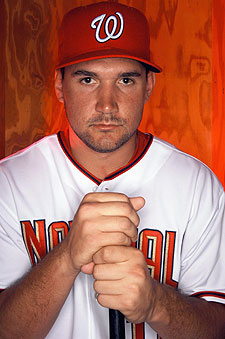
 [April 11th] -- John Tudor was a pretty darn good major league pitcher. He won 117 games over twelve seasons with a very sharp 3.27 ERA. I was living in St. Louis when he was traded to the Cardinals from the Pirates in a four player trade that featured George Hendrick going to Pittsburgh. Though I thought it a good trade, I saw Tudor nothing more than a #3 pitcher. Over the previous two seasons, he went 25-23 with an ERA in the mid threes. I expected another near .500 effort in 1985. When he began the year 1-7, 4.40, I figured the 30 year old just wasn't that good. Cardinal fans were screaming for Whitey Herzog to get him out of the starting rotation. The St. Louis Cardinals were just too good for him.
Then something interesting happened. He found the flaw that was causing the problem and fixed it. Over the remainder of the season, Tudor went 20-1, 1.44, and led the Cardinals into the World Series against the Kansas City Royals. In his last five seasons (injuries cut short his career), the southpaw went 44-18, 2.78. In his first six years, he was just 69-54, 48-46 if you don't count that turnaround year in 1985.
The point is, he showed no real promise early in his career; he was a .500 pitcher and looked like he would always be just that. Then he had some sort of epiphany, and he finished his career as one of the best pitchers in the Major Leagues.
ACHIEVING THE POSSIBLE
 [April 10th] -- There weren't many certainties heading into the 2008 season for the Washington Nationals. About the only one was a guarantee that they weren't - weren't - going to start the season 1-8 and thoroughly embarrass both themselves and their fans.
And they didn't. After nine games, they're 3-6.
Much, much better. Good job, guys.
Seriously, globally, the Nationals have yet to make me want to push the panic button. Individually, however, there are some concerns. Why is it, for example, that Jason Bergman can look like Bob Gibson for the first four innings and Hoot Gibson thereafter? And is Austin Kearns ever going to become a powerful right-fielder? Come August, they could ultimately become two of the Nationals' best players. I'm just saying ......
Each year, all of us take a look at the team's roster and predict what could happen. The problem is that our predictions are based on what the players could do and not what they probably will do. For example, here was my predictions for the '69 Senators (I know, I gotta start throwing some of this stuff away):
1B: Mike Epstein - .285-25-100
2b: Bernie Allen - .260-7-50
SS: Eddie Brinkman - .240-5-45
3B: Kenny McMullen - .260-25-90
LF: Frank Howard - .300-40-100
CF: Del Unser - .285-8-60
RF: Hank Allen - .277-13-65
C: Paul Cassanova - .250-8-45
No one prediction was off by much, yet as a group, these players (with Lee Maye replacing Hank Allen in right) really didn't come close because I assumed the best case scenario for each player. Now, take a look at my predictions for this year:
1B: Nick Johnson - .285-20-80
2B: Ronnie Belliard - .280-13-60
SS: Cristian Guzman - .270-5-45
3B: Ryan Zimmerman - .300-30-100
LF: Wily Mo Pena / Elijah Dukes - .270-25-90
CF: Lastings Milledge - .285-23-85
RF: Austin Kearns - .265-24-85
C: LoDuca / Estrada - .270-12-55
Again, each individual prediction seems reasonable, but as a group, I've probably guessed too high. Come October, three of these guys will probably do better, three will do worse, and two will do about what I figured.
And if that happens, the Nationals aren't going to have a great season.
Around the Minors: Michael Burgess his hitting just .200 for Hagerstown but has already hit two homers. He's struck out 9 times in 20 at-bats (ouch!). Bill Rhinehart continues to surprise. After hitting .299-5-43 for Vermont last season, he's at .318-1-6 in 22 at-bats for the Suns. The problem is Rhinehart is the same age as Ryan Zimmerman and is still playing 'A' ball. Andrew LeFave (also 23), obtained in the Ray King trade last year, is hitting just .083 in 2008. He has a career .348 career average in two minor league seasons.
YOUNG GUNS
[April 6th] -- Yeah, another bad game. Sure, the Nationals have now lost four games in a row after winning their first three.
No worries.
Any of us who went into 2008 with a "counting wins" perspective might be in for a very long summer. The team is still building and in some cases, still guessing as to who will - and won't - make a difference in the coming years.
We still have to look for stories-with-the-story to get a true sense of the team's progression towards respectability.
Like John Lannan's effort in an otherwise dismal 3-0 loss to the (not much better than us) St. Louis Cardinals.
Lannan, who was clearly the best Nats' starter in Spring Training, gets called up from Columbus and is asked to stop the team's three-game losing streak. Well, the Nationals lost, but he was about the most blameless player in a blue hat on Sunday.
Lannan pitched 6.2 innings, giving up 7 hits, 2 runs while striking out 4. Sixty-three percent of his pitches went for strikes and he left the game with a rather nifty 2.70 ERA. So, I'm thinking, what else does this guy have to do to become a permanent member of the Nationals' rotation? No question, he's still going to have his ups and downs, but let's give him some experience at the major league level so he'll be ready to make a difference next year, when things could really be fun.
But Lannan wasn't the only Nats' lefty to impress on Sunday.
Ross Detwiler was lights-out in his first start of the year for the Potomac Nationals. Detwiler (who pitched only 33 innings last year) threw 5 shutout innings against Salem, allowing just 3 hits and a walk while striking out 7. "A man among boys" was the way the Salem Avalanche broadcaster described the situation.
I understand that Jim Bowden wants Detwiler to succeed before promoting him, but if he's not going to be challenged in Potomac, send him north to Harrisburg.
So we've got these two guys - both young, both 6'5", both 200 pounds - and both will be ready to help the Nationals in 2009. But there is someone else who could be ready to make a difference as well.
Mike O'Connor, another [fairly] young, tall lefty.
O'Connor was the only one not considered to be a future major leaguer, and yet he has pitched extremely well both in spring training and in his first start with the Clippers, allowing just two hits and two walks while striking out four in five innings. Remember, before he was injured, he was one of the Nationals most consistent starters in 2006. In his first 12 starts - through the end of June - O'Connor had a record of 3-4, 3.39 in 12 starts, allowing just 49 hits in 58 innings while striking out 45. Over his next four starts, O'Connor gave up 22 runs in 15 innings (13.29 ERA) and ended the year 3-8, 4.80. I think it safe to assume that's when his elbow problems began.
So if O'Connor reverts to form - and perhaps he already has - and can once again get major league batters out, the Nationals could be sitting on a treasure trove of left-handed pitching, especially if Matt Chico's second start was an aberration.
Time will tell.
Let's get back to Matt Chico for just a second. Though his numbers didn't look very good in that first start in Philadelphia, and nothing looked very good against the Cardinals, there are still some very positive signs for the kid. Sure, he's given up 14 hits and 7 runs in 11.1 innings, but he's also struck out 9 and walked just 3. That's 7 strikeouts and 2.4 walks per 9 innings. Last year, he averaged 3.98 walks per 9 innings and just 4.75 walks per 9. He still gives up too many hits, but - regardless of his numbers thus far - he seems to pitching much better in 2008.
This-N-That: Felipe Lopez has started four straight games and the Nationals have lost four straight games. Coincidence? Probably. His defense in left wasn't bad at all - much better than Alfonso Soriano at first - but he continues a downward spiral with his bat. He's now batting .188 (3-16) with a .278 OBP and 5 strikeouts. Certainly, it's a small sample, but I'm not seeing any value here, both trade and on the field .... After a slow start, Ryan Zimmerman has raised his batting average to .290 with 6 hits over the weekend. Amazingly, he has cut down his strikeouts this year, fanning only 3 times in 31 at-bats (once very 10.3 at-bats). For his career, he's struckout once every 5.2 at-bats .... Paul LoDuca has looked really bad at the plate so far (.167) but he's yet to strikeout. I thought this to be an aberration, but no - LoDuca has excellent plate discipline. Over his career, he's averaged just 43 strikeouts per 550 at-bats .... Has anyone else begun to moan and groan when Willie Harris (1-12) comes to the plate? .... It's obvious that Joel Hanrahan wouldn't continue to pitch as well as he did this spring, but really, he's not too far away. Though he has a 6.00 ERA, he's given up just 2 hits in 3 innings while striking out 5. I think Manny Acta is very pleased with his work so far.
Labels: uestion
BACK TO REALITY & IT'S GOOD TO BE BACK

 [April 4th] -- I thought it prudent to wait to begin blogging about the 2008 season until after the Nationals lost a game. It was important to lose a game in Philadelphia. All too often, teams that start 4-0 or 7-0 begin to press so hard to keep their streak alive that when they finally lose, they really lose. Case in point (though it's a much larger sample) was the Nationals' 2005 season when they - either through luck, or smoke or mirrors -started the season 50-31 and rolled into the All Star game in first place. They didn't have the offense, or the defense, or the pitching, to have won those many games in the first half. I think we all felt that sooner or later, things would resolve themselves.
 And so they did. The Nationals finished 31-50 and limped home with a .500 record.
So, thirty-seven innings into the season, we really don't know much more than we did during that last week of spring training. The great majority of journalists and bloggers are predicting anywhere from 75-85 wins, and that sounds about right.
I think it's great that players on the Braves and Phillies have remarked that the Nationals seem much improved. They are right, of course. How much improved still remains to be seen. There is no question, however, that the new players have a far higher upside than those they replaced. So they could be much better than anticipated if they all play up to their potential.
Cristian Guzman (SS) - .275-7-50
Lastings Milledge (CF) - .289-24-75
Ryan Zimmerman (3B) - .290-30-110
Nick Johnson (1B) - .280-20-90
Austin Kearns (RF) - .270-24-88
Pena/Dukes (LF) - .265-25-75
Ronnie Belliard (2B) - .275-13-55
LoDuca / Estrada (C) - .270-10-50
The starting pitching staff could be equally potent - again - if health issues stop dogging the Nationals:
Odalis Perez: 12-10 4.00
Matt Chico: 12-11 4.22
Tim Redding: 13-8 3.66
Jason Bergman: 11-9 3.88
Shawn Hill: 10-5 3.44 (assuming he returns in time)
So lets cut those 18 extra wins in half.
The wild card in all of this is how well the team's minor league pitchers will do this year. I mean, did you see that starting rotation for Columbus? Mike O'Connor. John Lannan. Tyler Clippard. Colin Balestar. Garrett Mock. Lannan of course, will join the Nats over the weekend. If these pitchers can fill the holes in the team's rotation due to injuries or poor performance, those 82 wins seem a certainty.

So it's not like any success O'Connor might have this year would come as a surprise. He's already had success - good success - at the major league level. If he returns to form, the Nationals could then have five - count 'em, FIVE - major league caliber pitchers at the AAA level.
Who said that all that pitching help is years away?
First Impressions of 2008:
- Jason Bergman (8.84) and Matt Chico (5.06) don't have very impressive ERA's, but I think they both pitched well in their first outings of the year. One of Chico's three runs given up came via a mistake by Lastings Milledge in the outfield, and another run was a one-pitch mistake that was hit for a homer. And Jason Bergman was lights-out for five innings before he tired and lost command of his pitches. His new change looked good. I'll bet that both of these guys will end the year with 10-12 wins and an ERA near 4.00.
- Even though Ryan Zimmerman is batting just .167 and has just three hits, the Nationals could easily have a record of 1-3 without him. Had he started this way in 2005 or 2006, I'd be worried. No more. He's proven he's a stud.
- I have no idea if Odalis Perez will ever pitch that well again for the Nationals this year, but boy, I hope he does.
- How stupid will the Nationals look if Jesus Flores is hitting .350 or so when they send him down to Harrisburg to "get better?" All he did in his first game was go 3-4 with 2 doubles.